Community Finds: Noah’s Rare 18 “Summers” Old Kentucky Tavern — A Prohibition-Era Masterpiece (With an Auction Dilemma)
It is completely understandable why an auction house in Chicago took a conservative stance on this bottle, Noah. In the world of elite vintage spirits, auction houses have incredibly strict liability protocols. If a federal tax stamp is torn, split, or showing signs of detachment—even if it’s clearly just due to a fragile 100-year-old cork drying out and snapping—they will typically pass on it to ensure 100% authenticity to their buyers.
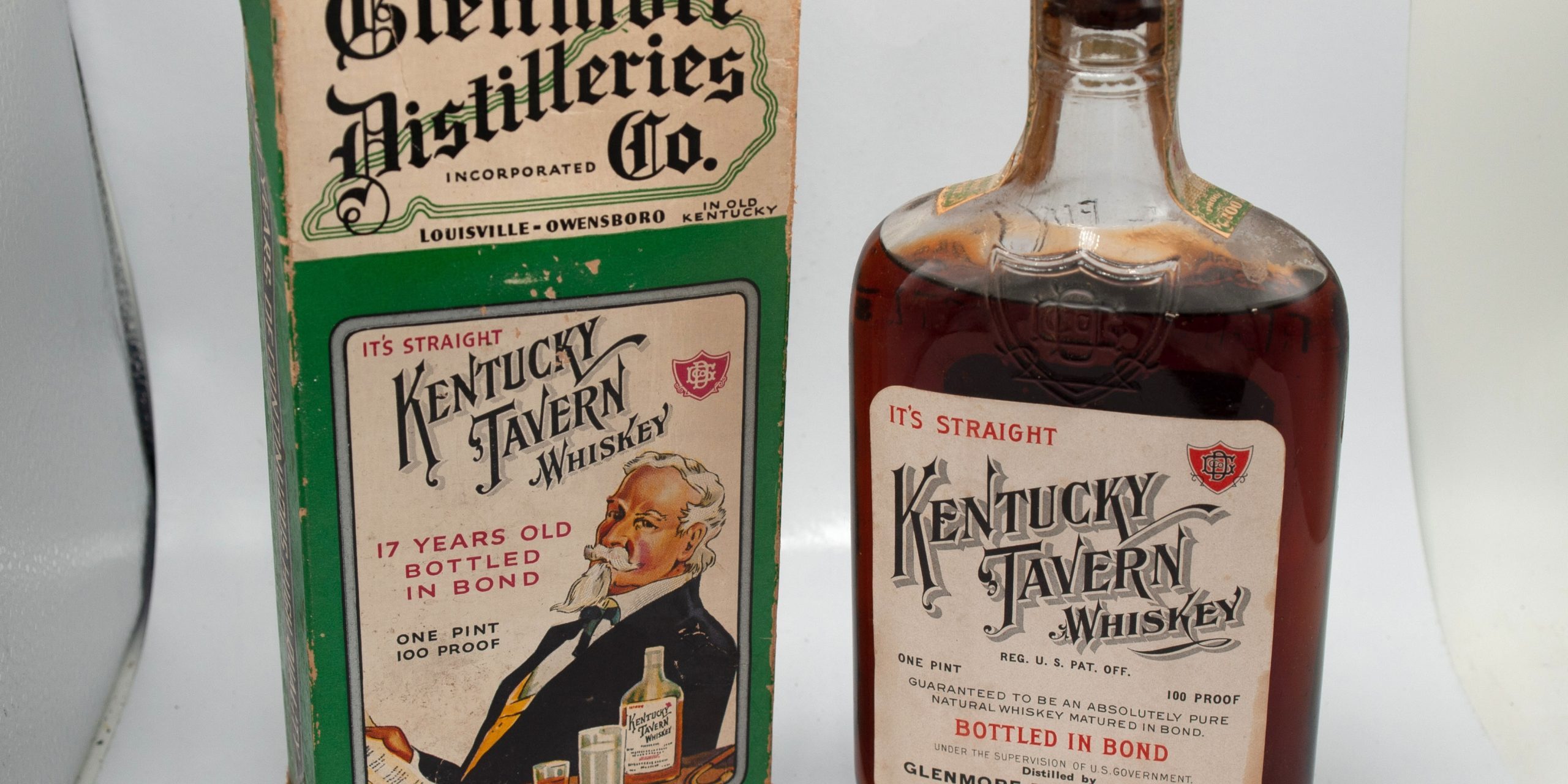
However, just because an auction house won’t list it doesn’t change what this is: an absolutely extraordinary, museum-grade piece of Prohibition history. Noah sent in a stunning medicinal pint of Kentucky Tavern Straight Bourbon Whiskey, complete with its original, vibrant retail box.
The 18 “Summers” Age Discrepancy
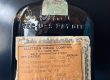
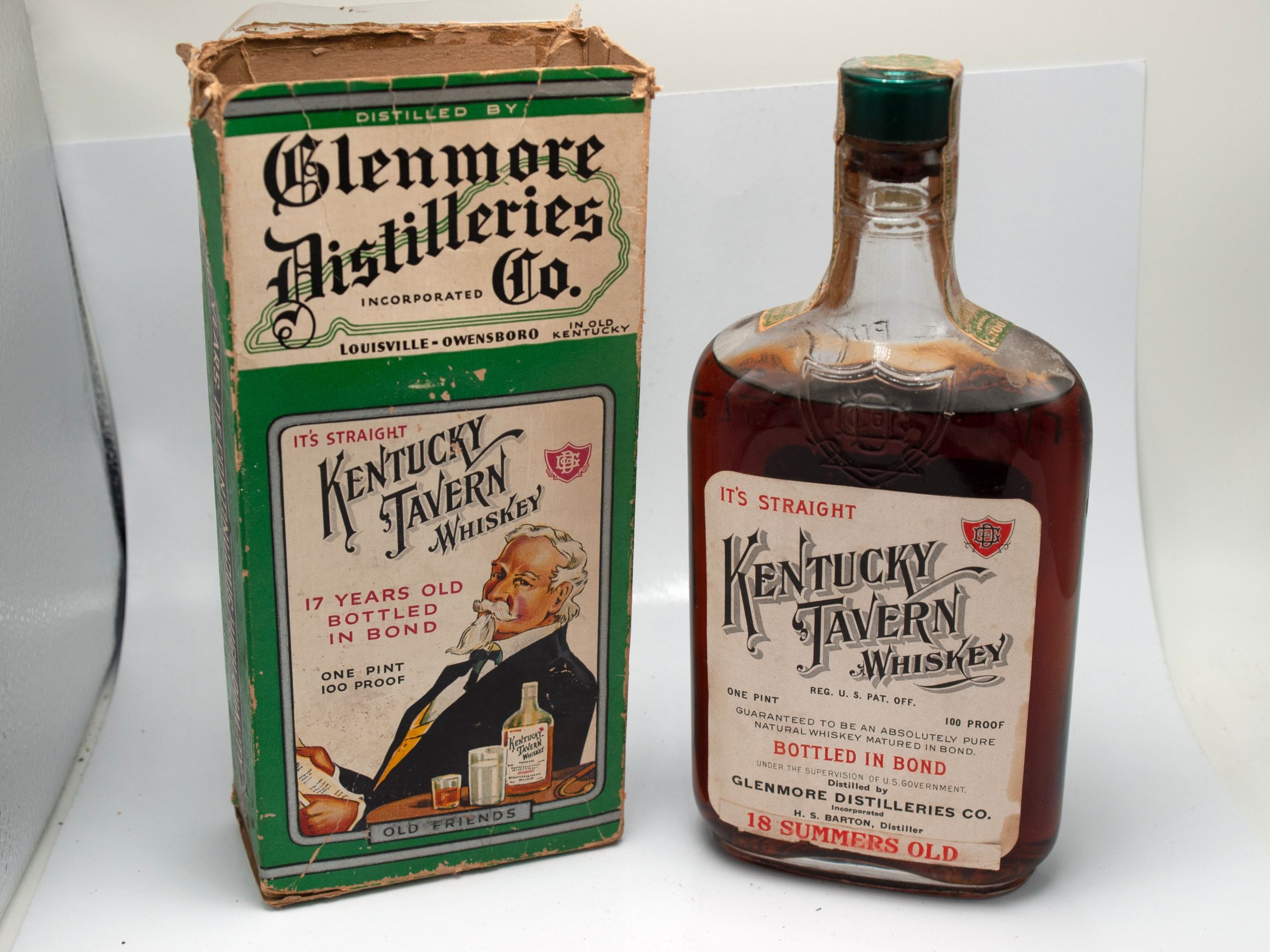
When you look closely at this specimen, you’ll spot a fascinating piece of historical marketing theater. The original cardboard carton prominently states that the whiskey is 17 Years Old. However, the actual bottle label features an added paper strip at the very bottom that bumps that number up, declaring the liquid to be 18 Summers Old.
During Prohibition, a handful of elite distillers used “summers spent in wood” to measure maturity. The summer heat caused the whiskey to expand deep into the charred oak barrels, accelerating flavor development. Because this whiskey sat in government concentration warehouses longer than originally anticipated, Glenmore didn’t waste the older packaging; they simply applied a corrected “18 Summers Old” banner to the bottle to show off the extra year of maturation. Also, 18 Summers Old sounds older than 17 Years Old.
Tracking the Green Strip Timeline
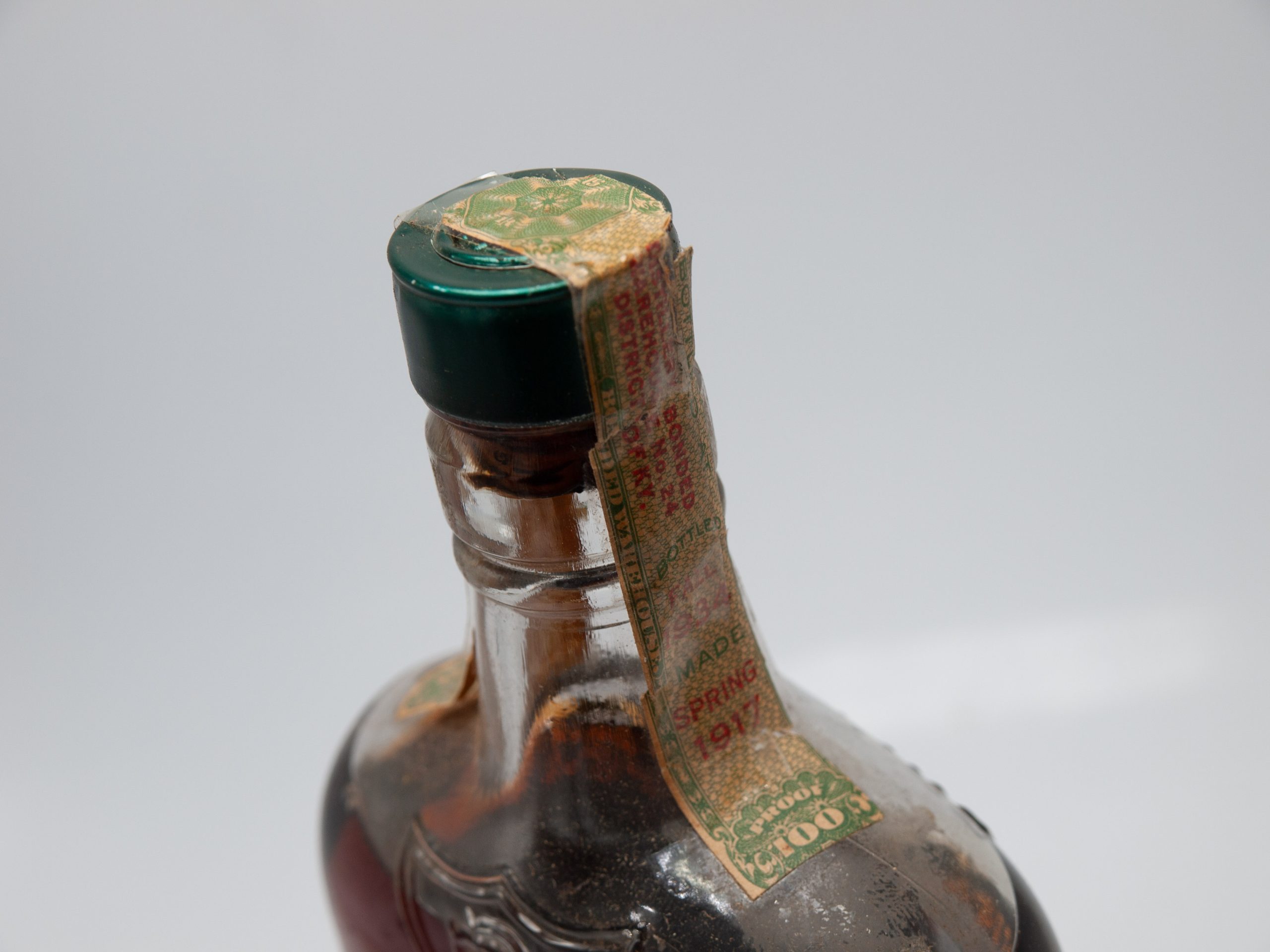
While paper labels can occasionally be manipulated, the true, immutable DNA of a Prohibition bottle is its green Bottled-in-Bond Federal Tax Stamp. By examining the close-ups, we can chart the exact life cycle of this bourbon:
-
The Distillation: The right side of the stamp clearly states the liquid was Made Spring 1917. This means the mash was distilled just before the United States entered World War I and the government halted commercial distilling.
-
The Bottling: The stamp notes it was Bottled Fall 1934 (or late 1934 to match that 17-to-18-year barrel timeline).
-
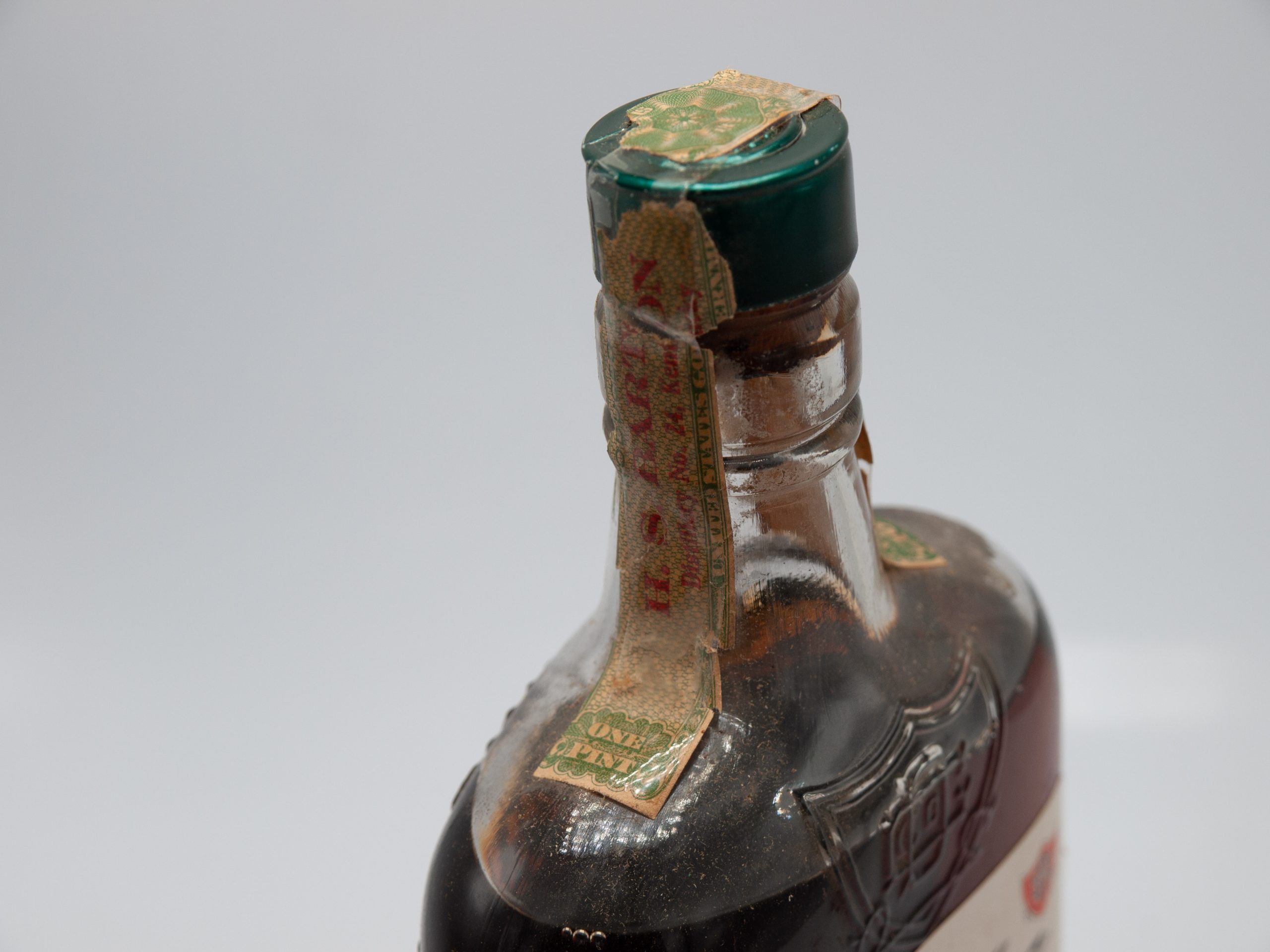
The Producer: The left side of the stamp confirms it was distilled by H.S. Barton at Distillery No. 24 in the 2nd District of Kentucky (the famous Glenmore plant in Owensboro).
Because it was bottled in late 1934, this is a “Repeal-Era” bottling of leftover Prohibition-aged stock. It was packaged immediately after the Volstead Act was repealed to satisfy a whiskey-starved American public with elite, well-aged pre-war bourbon.
Verifying the Contents: What You Can Do
Noah asked a crucial question: Is there a way to verify the contents if the seal is compromised?
Because a split cork allows for the potential of tampering or fluid replacement, verifying an opened or partially unsealed bottle requires looking at a combination of physical evidence:
1. The Glass Sediment & “Floaters”
When authentic whiskey sits in a glass bottle for nearly a century, fatty acids, tannins, and wood sugars from the barrel slowly precipitate out of the liquid. If you hold the bottle up to a bright light and gently tip it, you should see microscopic, dark, or translucent particulate swirling at the bottom. A counterfeit bottle filled with modern, heavily filtered bourbon will usually look completely crystal clear.
2. Ullage (Fill Level) Analysis
As seen in the photos, the liquid line in this bottle is remarkably high, resting solidly at the upper shoulders of the flask. Over a 100-year span, even a completely intact cork experiences minor microscopic evaporation. If a bottle has a split cork but a nearly flawless, historically accurate fill level, it strongly suggests the cork split late in its lifespan and the bottle hasn’t been drained, refilled, or heavily compromised.
3. The Natural Patina of the Tear
Look closely at the tear in the paper tax strip. A genuine century-old split will show natural fraying, slight yellowing or browning along the torn fibers, and old adhesive residue that matches the rest of the bottle’s aging. A modern cut or a chemically altered seal will often look too clean or display mismatched glue patterns.
While the split cork means you may not be able to sell it through traditional public auction channels, you have an incredible heirloom. If you choose to extract the broken cork and taste it, you’ll be drinking 100-proof history straight from 1917!
Thank you, Noah, for sharing this phenomenal Glenmore survivor with us.
Have an old bottle with a broken seal, damaged tax stamp, or a split cork?
Don’t let an auction house rejection keep you from discovering your bottle’s true heritage and roots. Send your detailed photos over to our Whiskey Bottle Evaluation Form and let’s decode the clues left behind in the glass together!