Community Finds: Daniel’s Sealed “Sardine Can” Schenley Pints from the Dark Days of Prohibition
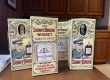
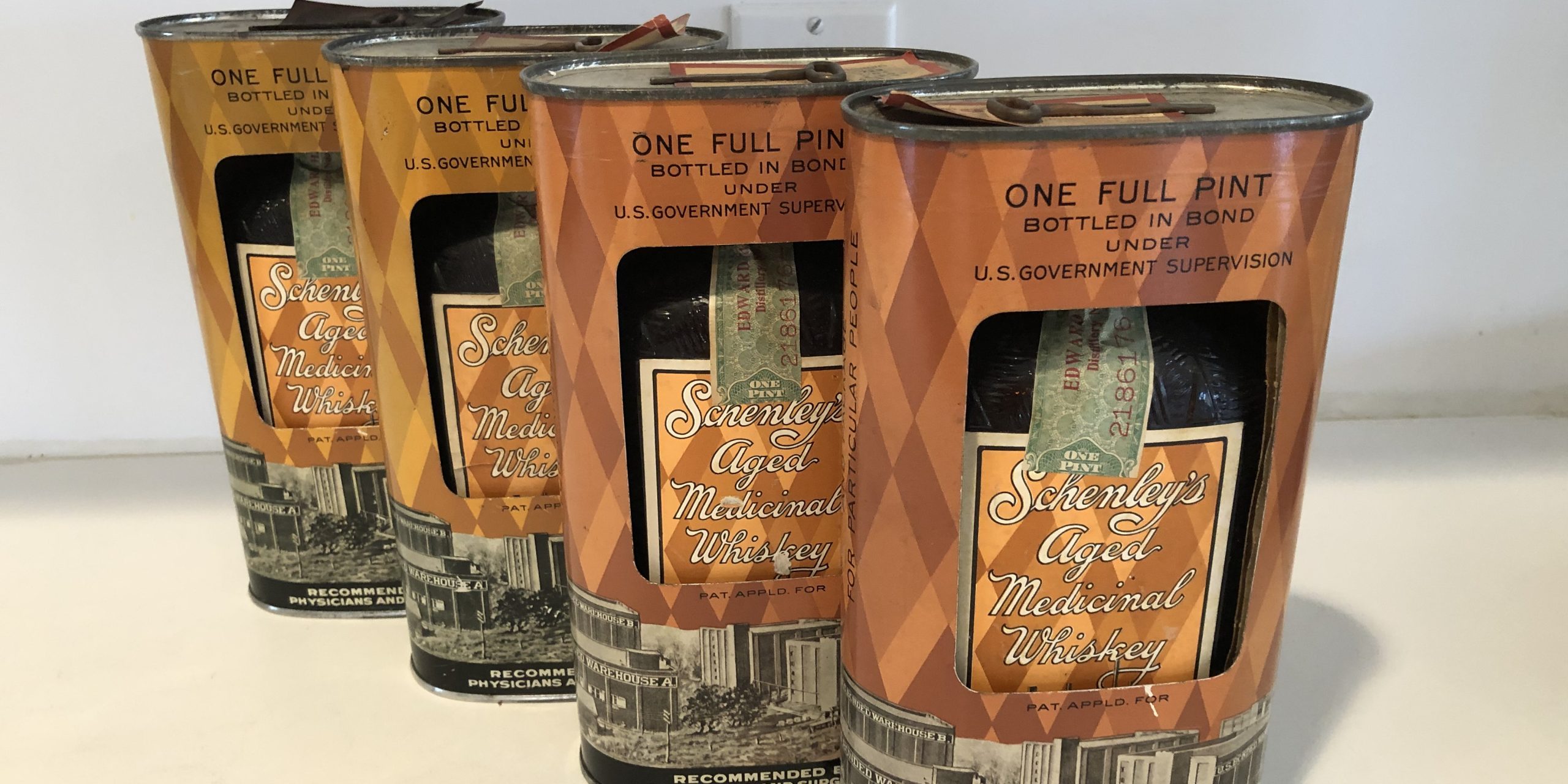
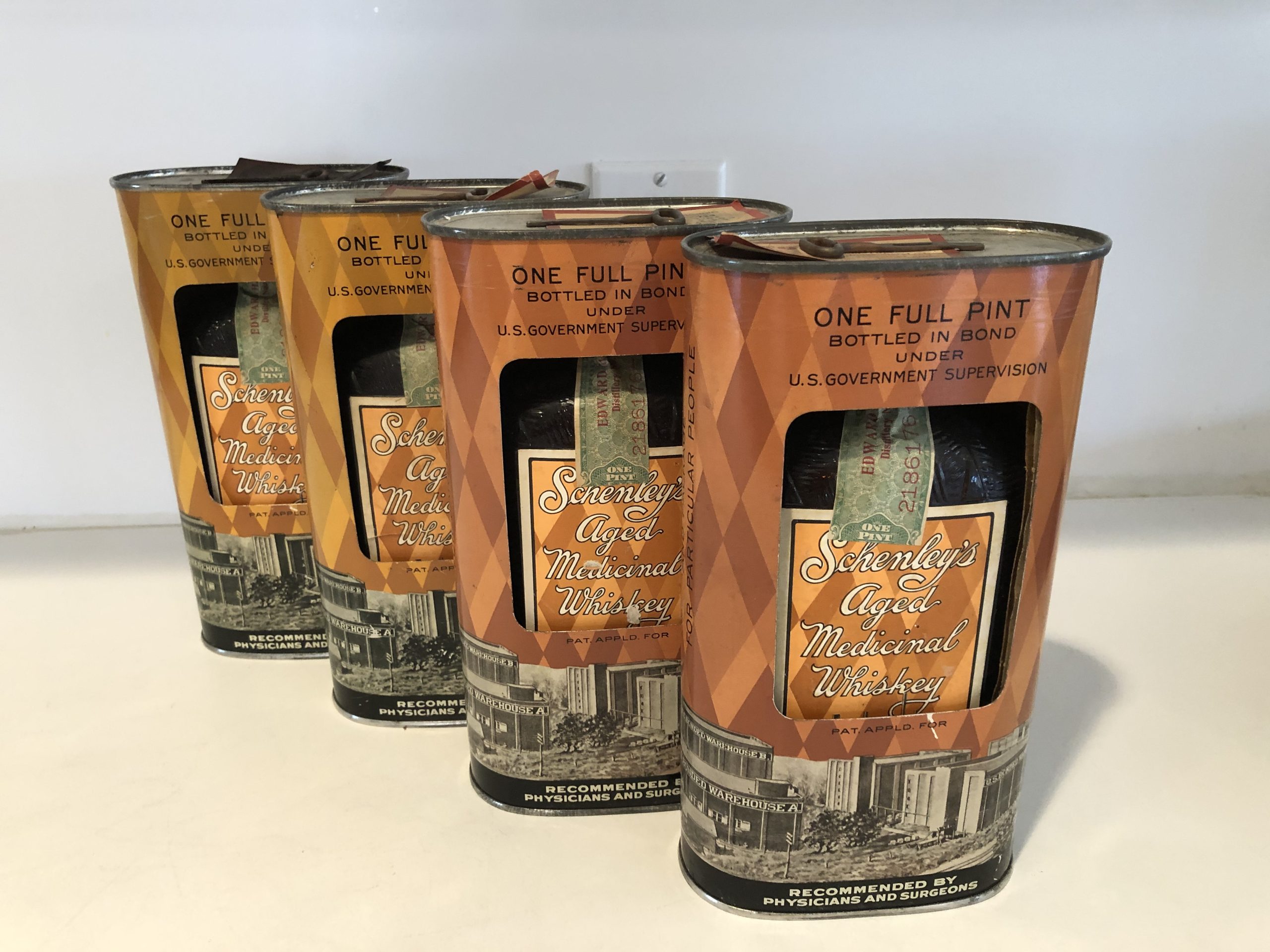
Every collector knows that finding a single untouched bottle of Prohibition-era medicinal whiskey is a victory. But what reader Daniel from Jericho, NY sent in is an unbelievable time capsule: a matching set of four completely unopened, pristine pints of Schenley’s Aged Medicinal Whiskey, still securely sealed inside their original, patent-applied-for metal cans.
The “Sardine Can” Defense Against Bootleggers
When national Prohibition was enacted in 1920, the federal government authorized exactly six liquor companies to manage and distribute existing stocks of spirits for “medicinal” use. Among those chosen giants was the Schenley Products Company.
Because prescription whiskey was highly coveted, bootleggers and corrupt pharmacy clerks constantly tried to siphon off the real stuff, refilling the bottles with hazardous, watered-down moonshine or industrial alcohol. To combat this massive fraud, Schenley introduced an ingenious, high-security packaging system: the tamper-proof tin can.
As you can see clearly on top of the tins in, each can came equipped with a small metal key welded or taped to the lid. To actually access the medicine, the patient (or the pharmacist) had to engage the key and strip away a band of metal all the way around the perimeter—exactly like opening a can of sardines. Because a peeled tin could never be resealed, this completely guaranteed to the consumer that the 100-proof, federally supervised liquid inside was untampered and pure.
Decoding Daniel’s Pints
Looking through the window cutouts of the diamond-patterned tins, we can gather some incredible technical data points straight from the labels and green federal tax stamps:
-
The Distiller: The green tax strip peeking through indicates this batch was distilled by Edward H. Brinkmann. Brinkmann operated Distillery No. 2 in the 1st District of Ohio, specializing in high-rye bourbons that were later consolidated into Schenley’s vast medicinal reserves.
-
The Proof: The tins proudly boast “ONE FULL PINT – BOTTLED IN BOND” at a rock-solid 100 Proof, meeting the strict criteria mandated under U.S. Government supervision.
-
The Graphics: The lower band of the tin beautifully showcases a black-and-white lithograph of Schenley’s famous “Bonded Warehouse A,” emphasizing the secure, clinical, and lawful storage of the spirit.
-
The Prescription Clues: Stamped right along the bottom rim is the definitive legal shield of the era: “Recommended by Physicians and Surgeons.”
The Ultimate Survivor Status
Most of the time, when these tins are found today, they have long since been keyed open, leaving behind either just the empty bottle or a heavily battered metal shell. Finding a single un-keyed container with its original key intact is rare. Finding a matching squad of four immaculate, unopened tins means the seals, corks, and liquid levels inside have been perfectly protected from light and air for nearly a century.
An enormous thank you to Daniel for sharing this breathtaking piece of pharmacy and distilling history with the community!
Have a piece of liquid history hiding in your attic?
Whether it’s a “sardine can” pint from the Prohibition era, an old bonded bourbon, or a pre-Prohibition rarity, I’d love to help you decode its story. Head over to our updated Whiskey Bottle Evaluation Form to send in your photos!