Community Finds: Jim’s Extraordinary 1913 Pre-Prohibition Old Crow Pure Rye — A Transformed Great-Grandfather’s Heirloom
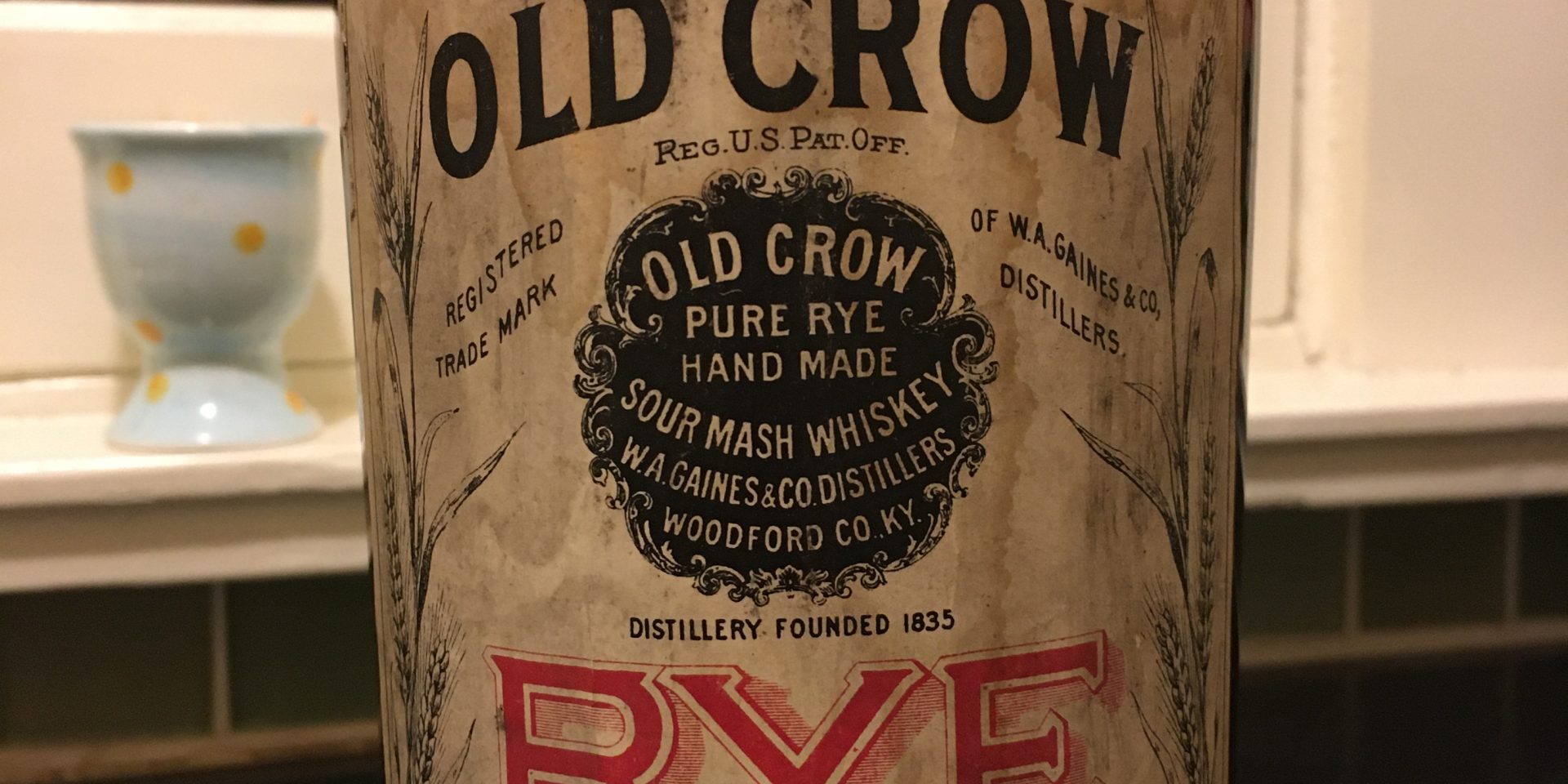
Every once in a while, a bottle surfaces that captures the exact chaotic moment American distilling shifted from a free market into the dark constraints of National Prohibition. Reader Jim reached out with an absolute stunner of a find discovered straight from his great-grandfather’s liquor cabinet: an authentic, beautifully preserved quart of Old Crow Pure Rye Whiskey.
Old Crow is famous today as a budget-friendly bourbon, but a century ago, its historic rye expressions were considered top-shelf luxuries. Jim’s bottle has an incredibly unique story to tell through its dates, markings, and government stamps.
Deciphering the 1913 to 1920 Timeline
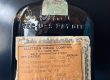
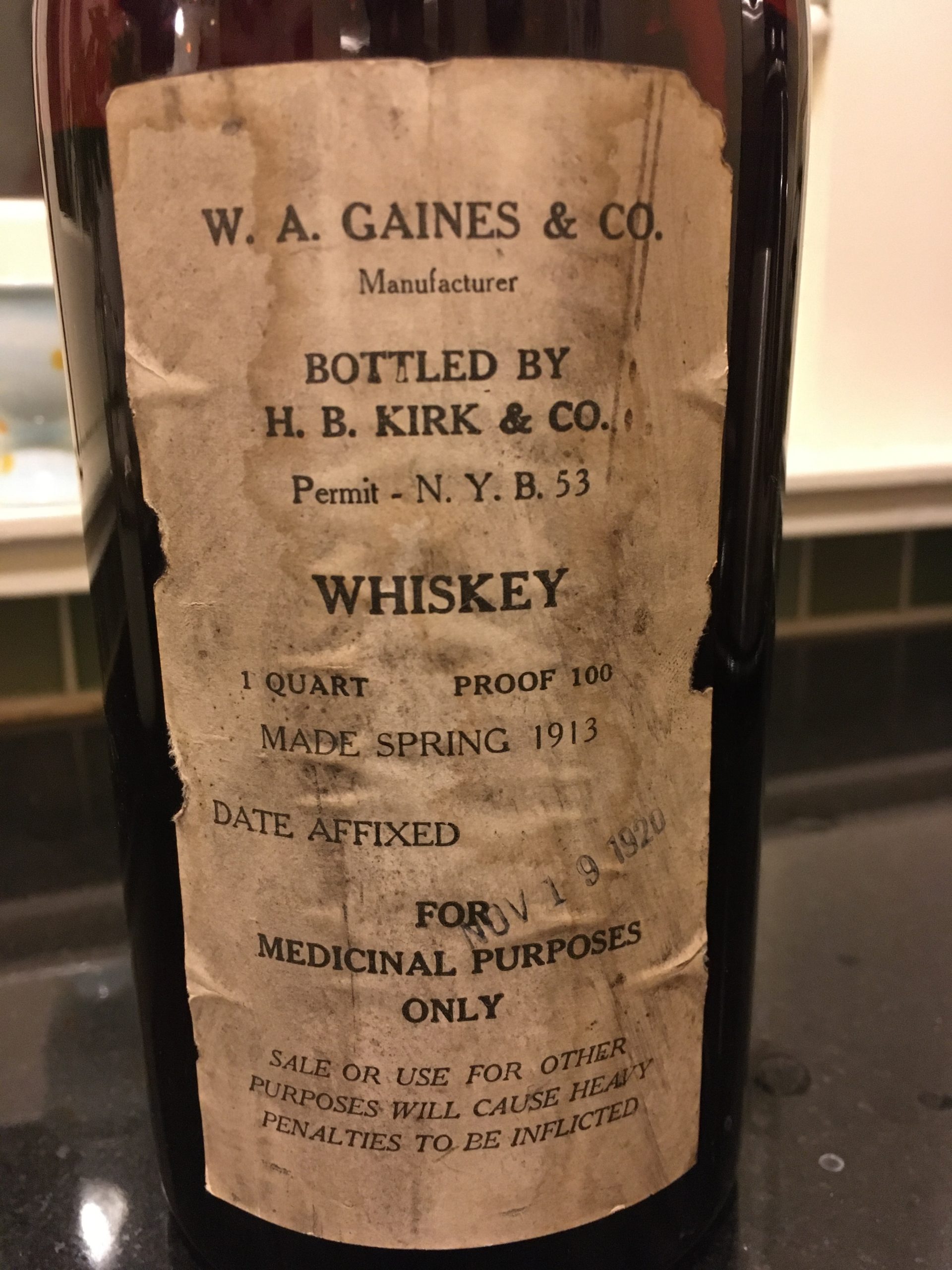
Looking closely at the back label, we can piece together the exact journey this liquid took. The label explicitly marks this whiskey as Made Spring 1913 by the legendary W.A. Gaines & Co. in Woodford County, Kentucky.
When this pure rye was distilled in 1913, Prohibition wasn’t yet the law of the land. It was aged in charred oak barrels for seven years. However, by the time it was ready to be distributed, the Volstead Act had taken effect in January 1920, making the commercial sale of beverage alcohol completely illegal.
To save the inventory, prominent wholesale bottlers like H.B. Kirk & Co. of New York (operating under federal Permit N.Y. B. 53) stepped in. As stamped on the back label, the official Date Affixed is Nov 19, 1920, overprinted with the bold mandatory warning: “For Medicinal Purposes Only.” This tells us Jim’s bottle is a rare “transitional” relic—distilled as a luxury pre-Prohibition spirit but officially glassed and stamped right at the dawn of the medicinal era to be legally distributed through pharmacies.
Cracking the Label Codes & The Mystery Number
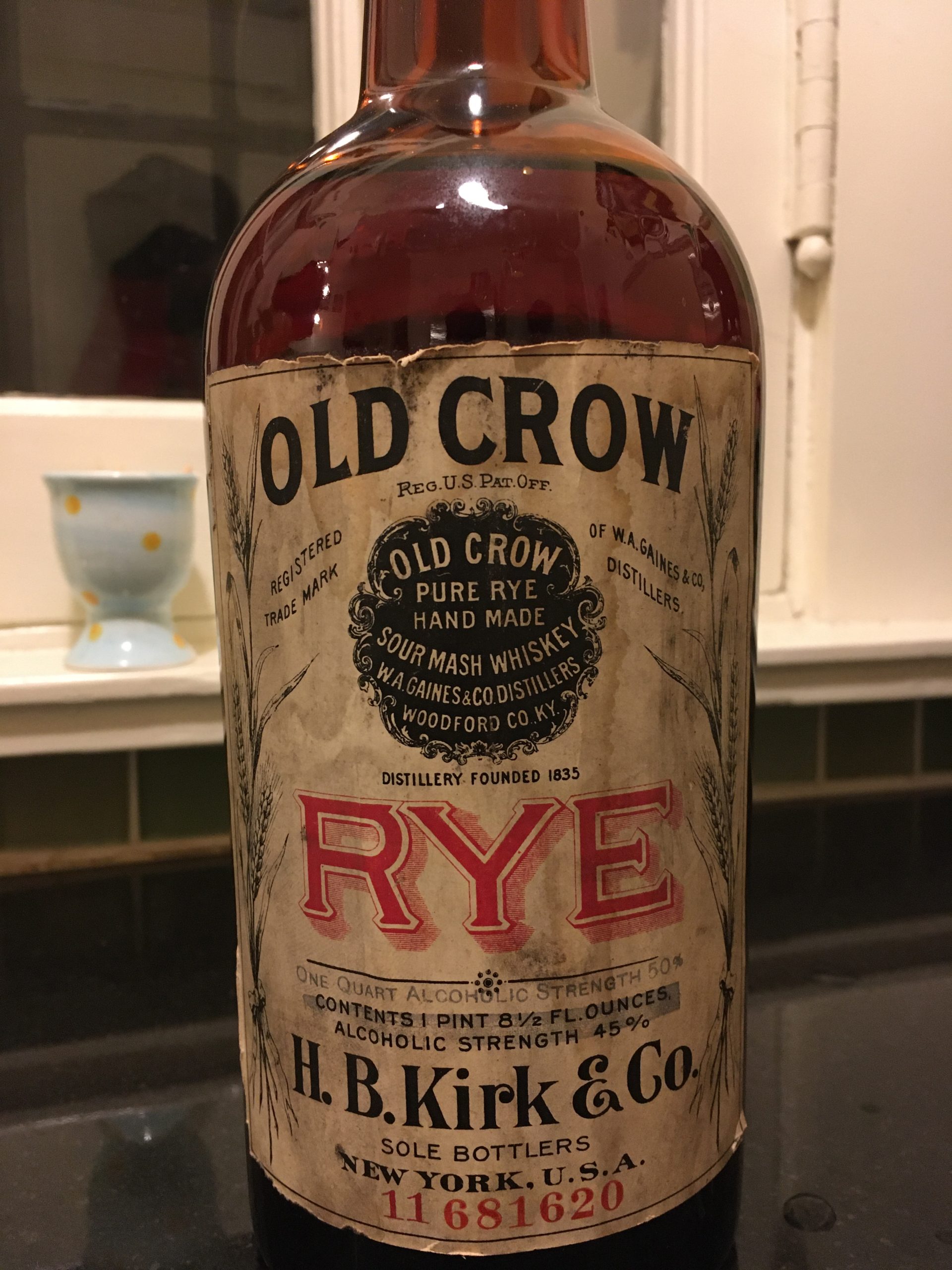
Jim asked a great question about the red stamped number at the bottom of the front label.
During the early transitional months of 1920, the Federal Prohibition Department required rigid accountability to prevent legal medicinal warehouse stocks from being diverted to the black market or bootleggers. That stamped number is a specific, sequential federal serial and case tracking number. Every single bottle of medicinal liquor had to be explicitly numbered and registered to a specific prescription block so the government could audit the wholesalers and pharmacies.
If you look right above that serial number, you’ll see a fascinating label correction that perfectly illustrates early Prohibition confusion:
-
The original lithographed label text reads “One Quart Alcoholic Strength 50%” (100 Proof).
-
Right below it, a dark gray overprint block was hastily added to update the volume and proof to comply with new regulations, reading: “Contents 1 Pint 8 1/2 Fl. Ounces, Alcoholic Strength 45%”.
Condition & Modern Valuation
Jim noted that the top wrapper is missing and the cork appears to have shrunk slightly by about 2mm. While cork shrinkage is entirely standard for a 113-year-old bottle, the overall preservation seen here is stellar. The fill level is exceptionally high and healthy, the glass is beautiful, and both paper labels are almost entirely intact.
Authentic pre-Prohibition and early transitional rye whiskeys from iconic producers like W.A. Gaines are highly sought after by historical purists.
-
Estimated Valuation: On the modern vintage market, an intact, authenticated transitional medicinal quart of Old Crow Pure Rye from this era routinely commands between $2,500 and $3,000.
It is an incredible heirloom to inherit from a great-grandfather’s cabinet—a literal time capsule from the first year America went dry.
Did your great-grandfather leave behind a hidden stash of history in his old liquor cabinet?
Whether you’ve uncovered a rare medicinal pint with an overprinted label or an intact pre-Prohibition classic, we want to help you decode the stamps, serial numbers, and historical value. Send your photos over to our Whiskey Bottle Evaluation Form and let’s read the glass together!