Community Finds: Susan’s Striking Cache of Medicinal Old Sunny Brook Pints
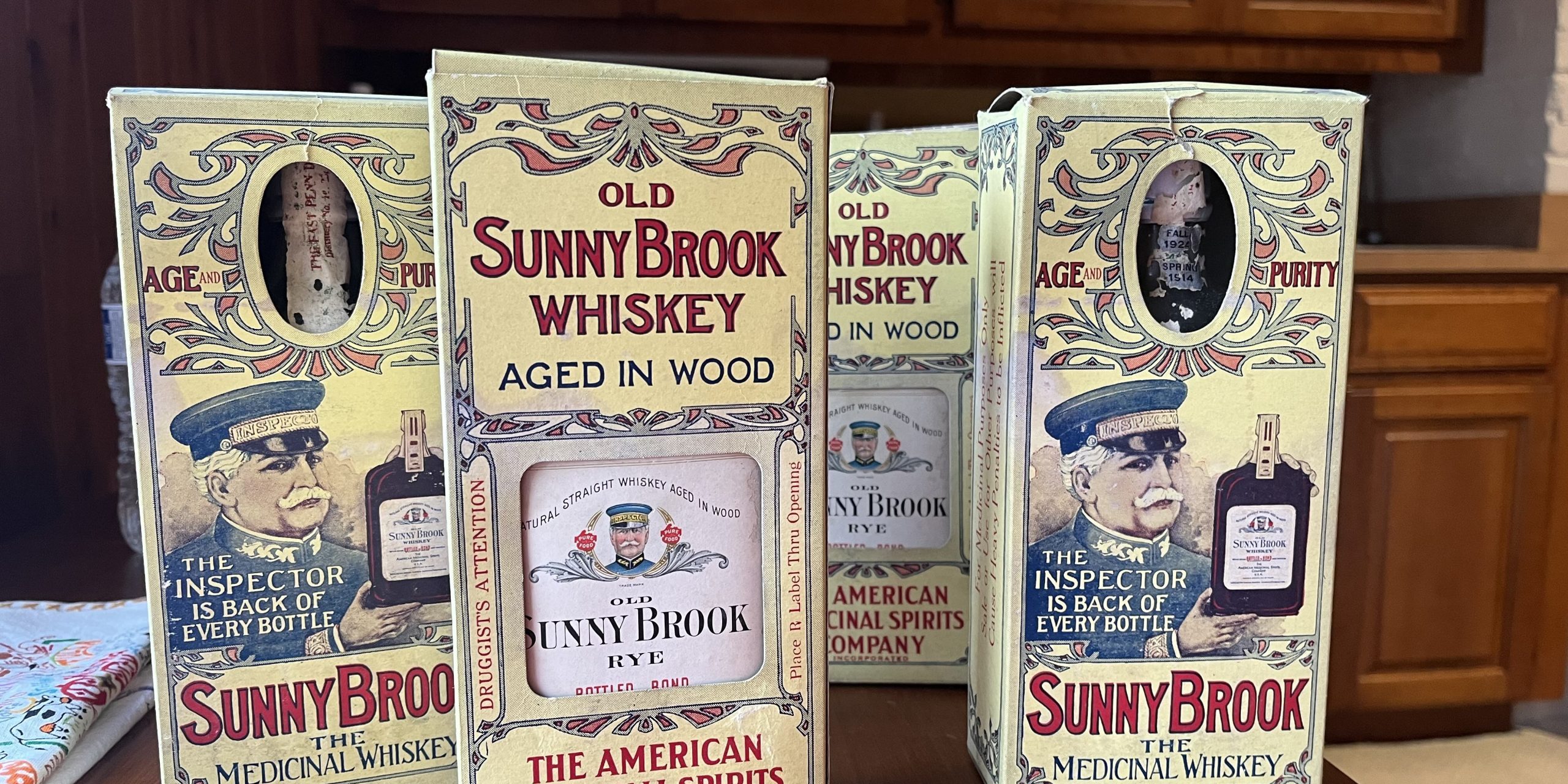
Every once in a while, a submission comes along that completely redefines what a “good day in the inbox” looks like. A reader named Susan recently sent over some photos of an absolute treasure trove: not one, but four intact Prohibition-era medicinal whiskey cartons, complete with their original sealed contents.
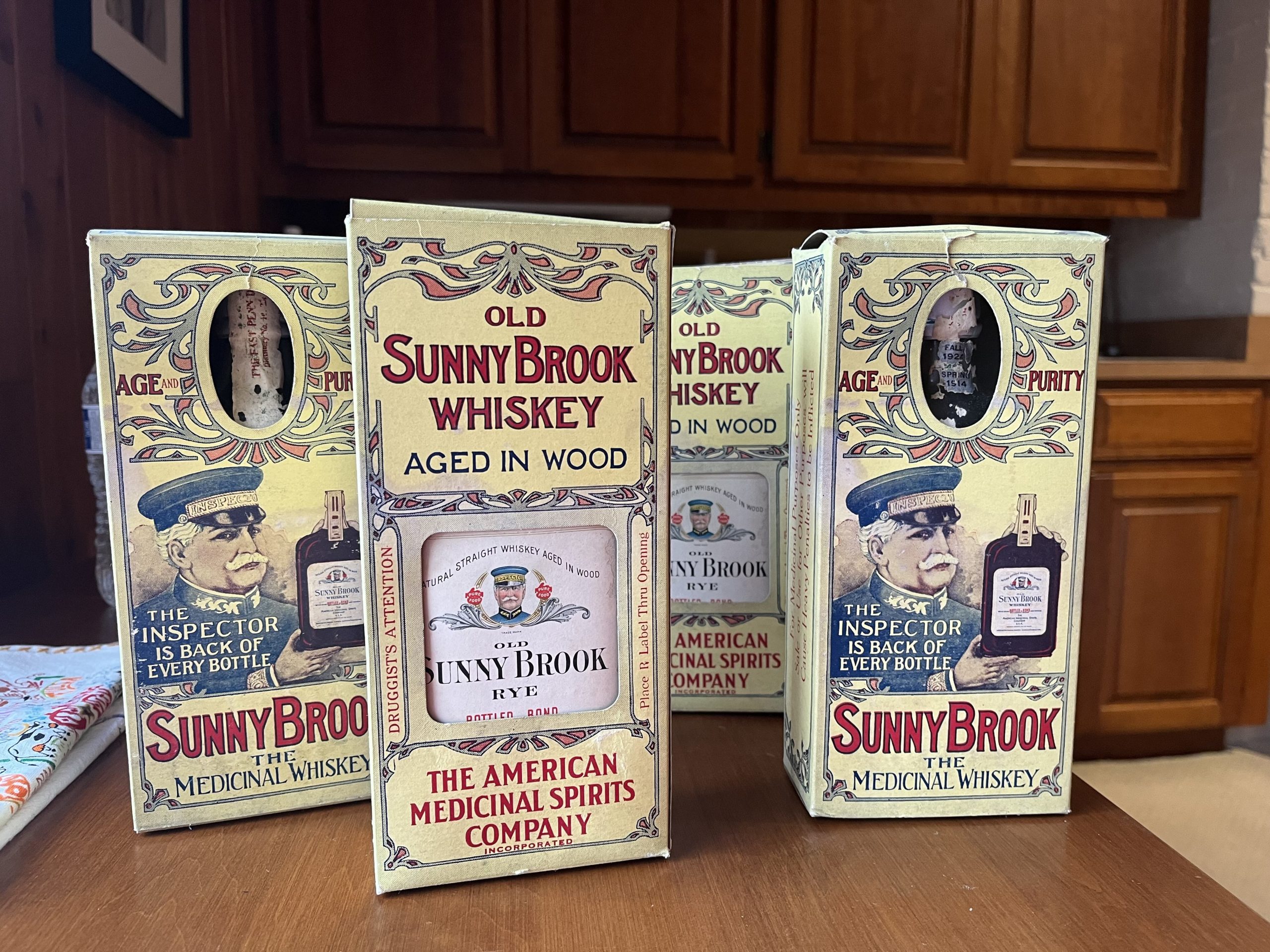
The Backstory: “The Inspector Is Back of Every Bottle”
To understand why Susan’s find is so special, you have to look at the history of the brand staring back at you from the cardboard. Old Sunny Brook was originally produced in Louisville, Kentucky, and by the turn of the 20th century, it was one of the massive powerhouses of the American whiskey world.
They built their entire reputation on purity, famously adopting their iconic trademark: a stern-faced government inspector in a high-collar uniform, accompanied by the slogan, “The Inspector is Back of Every Bottle.”
When national Prohibition went into effect in 1920, it legally crushed the commercial liquor industry. However, a tiny loophole remained: medicinal whiskey. The U.S. government allowed six companies to hold permits to consolidate and distribute remaining warehouse stocks for “medicinal purposes.” The largest and most powerful of these operations was the American Medicinal Spirits Company (AMS).
AMS astutely bought up the rights to the most trusted pre-Prohibition brand names—including Old Sunny Brook—because doctors and patients already trusted their reputation for “pure” spirits.
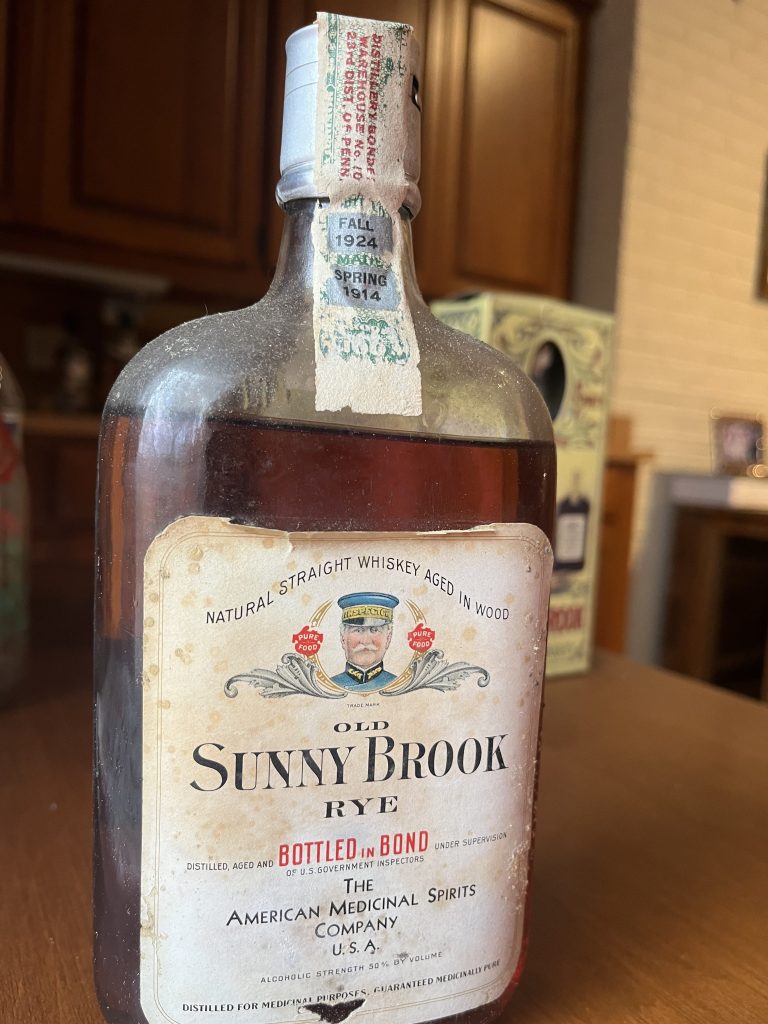
Decoding Susan’s Finds
When you look at the close-up of the pint, the green federal tax stamp across the capsule gives us the exact distillation and bottling timeline, pulling back the curtain on history:
-
The Liquid: This is an Old Sunny Brook Rye. While the brand is heavily associated with its Bourbon expressions in the collector community, coming across these straight Rye iterations from the era is significantly less common and a treat for dusty historians.
-
The Timeline: This rye whiskey was distilled in the Spring of 1914—six full years before Prohibition even started. It was produced back when distilleries were running at full tilt.
-
The Interruption: While this whiskey sat aging in wood inside a bonded warehouse, the 18th Amendment passed. It was essentially frozen in time.
-
The Release: It was finally rescued from the warehouse and bottled in the Fall of 1924 by the American Medicinal Spirits Company to be sold via doctor prescriptions in pharmacies.
An Unbelievable Survival Rate
What makes Susan’s collection so exciting is the presence of the original outer display boxes. These cardboard cartons feature stunning, colorful graphics reminding the pharmacist of the brand’s pedigree: “Druggist’s Attention: Place Rx Label Thru Opening.”
Because these cartons were designed to be torn open, discarded, or handled frequently by consumers and pharmacists, finding a single box in legible condition is tough. Finding four of them sitting together side-by-side with full bottles inside is a true historical rarity.
A massive thank you to Susan for sharing this breathtaking look at American medicinal spirits history!
Did you find an old prescription pint or historic bottle?
If you’ve uncovered a piece of history in an old family estate, basement, or closet and want to know its era, rarity, or value, I’d love to help you tell its story. Head over to the updated Whiskey Bottle Evaluation Form to upload your photos!