This hidden-in-the-kitchen discovery is the exact kind of story that reminds me why preserving historical spirits is so vital. Kristeen recently reached out to the site after hitting a wall trying to research a fascinating family heirloom.
Her mother originally found this bottle tucked away behind the kitchen drawers of an apartment in Appleton, Wisconsin, back when her parents were first married in the early 1960s.
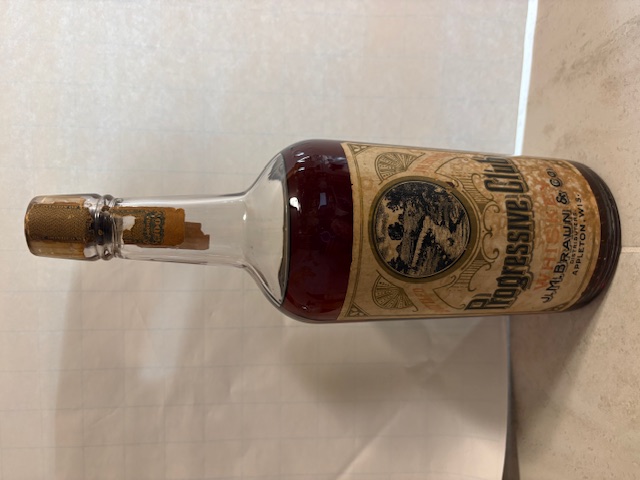 What Kristeen’s mother pulled from behind those drawers isn’t just an old bottle of liquor; it is a hyper-local, pre-Prohibition relic: a bottle of Progressive Club Whiskey, distributed by J.M. Braun & Co. right out of Appleton, Wis.
Let’s dive into the fascinating historical markers on this piece.
The Historical Blueprint
Local merchant bottles like this are incredibly rare because they were produced in limited quantities compared to the massive national distillers of the era.
-
The Hometown Distributor: The bottom of the main label clearly bears the name “J.M. Braun & Co., Distributers, Appleton, Wis.” City directories from the turn of the 20th century confirm J.M. Braun & Co. operating right in Appleton. Before Prohibition shuttered the American alcohol industry in 1920, it was common for local wholesale grocers, saloons, or independent liquor dealers to buy wholesale barrels of whiskey from major distilleries (often out of Kentucky or Pennsylvania), blend or bottle it themselves, and sell it under their own proprietary house labels.
-
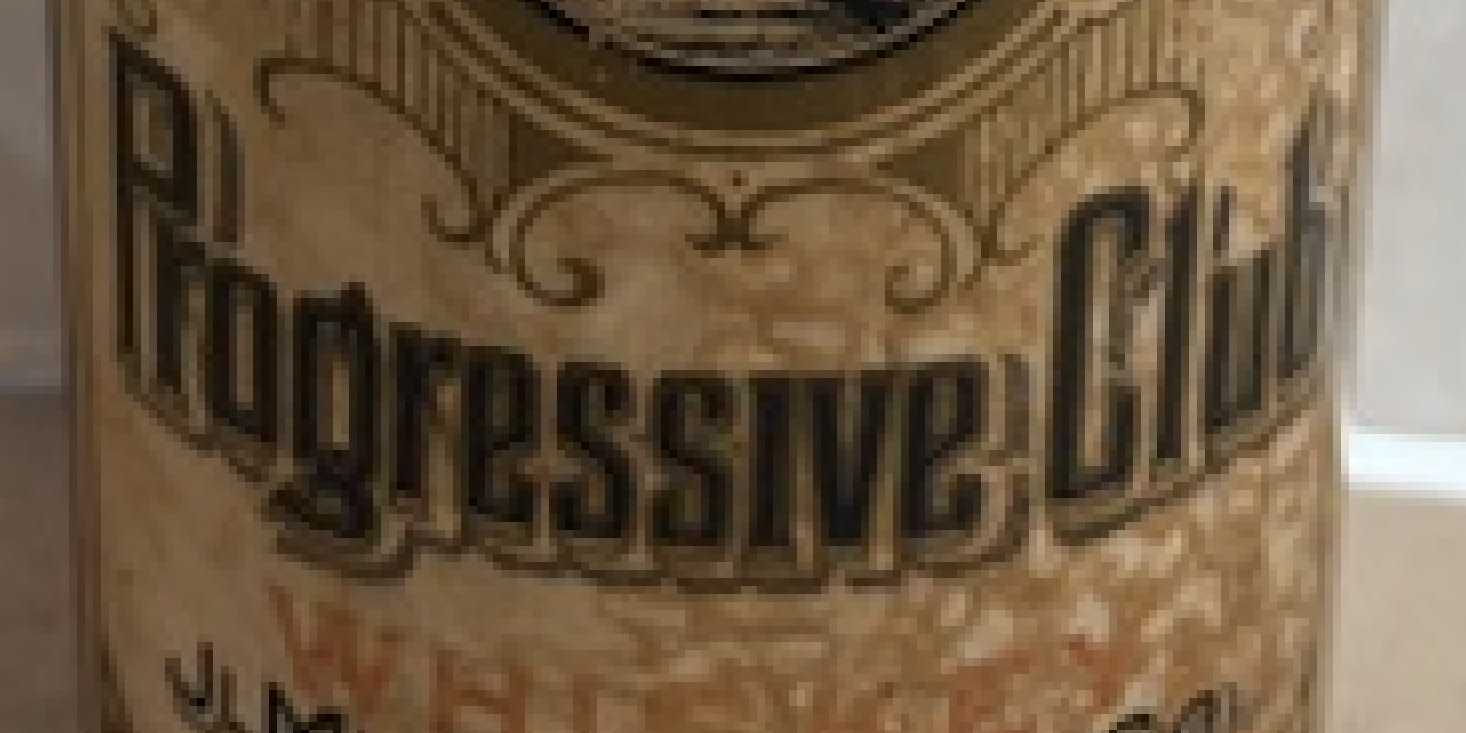
The “Progressive Club” Branding: The ornate typography and classic central illustration of a winding river landscape epitomize late 19th and early 20th-century label design. The term “Club Whiskey” was heavily utilized in this era to signify a higher-end, premium blend meant to mimic the private stock served at exclusive gentlemen’s clubs.
-
The Neck Seal: Look closely at the top of the neck in the image. You can see the remnants of a delicate, gold-toned paper seal over the cork. While the tax stamp has deteriorated over time, the cork appears deeply set and undisturbed.
-
Ullage & Clarity: For a bottle that spent decades hidden in a kitchen cavity subject to seasonal Wisconsin temperature shifts, the fluid level (ullage) is phenomenal, resting right at the lower neck/upper shoulder. The whiskey itself maintains a deep, rich amber hue with remarkable clarity, free of heavy cloudiness or sediment.
The Verdict
Kristeen, your mother found an absolute treasure. Because J.M. Braun & Co. disappeared with the onset of Prohibition, this bottle is almost certainly a survivor from the 1900s to 1910s. It didn’t just sit behind those kitchen drawers since the 1960s—it was likely hidden back there during Prohibition by an apartment tenant who wanted to keep their private stash away from the eyes of the law, only to be forgotten for several decades.
It is a beautiful, tactile piece of Fox River Valley history. Thank you so much for sharing it with us!
Uncovered a hidden piece of history in your home? If you’ve found an old bottle tucked away in a crawlspace, behind a wall, or under the floorboards, let’s figure out its story together. Head over to our Whiskey Bottle Evaluation Page to upload your photos and get a free breakdown.