This is a classic “Wild West” historical puzzle that keeps vintage bottle collecting so fascinating. A reader named Kerri recently reached out to the site on behalf of her father, who has held onto a highly unusual bottle for a very long time.
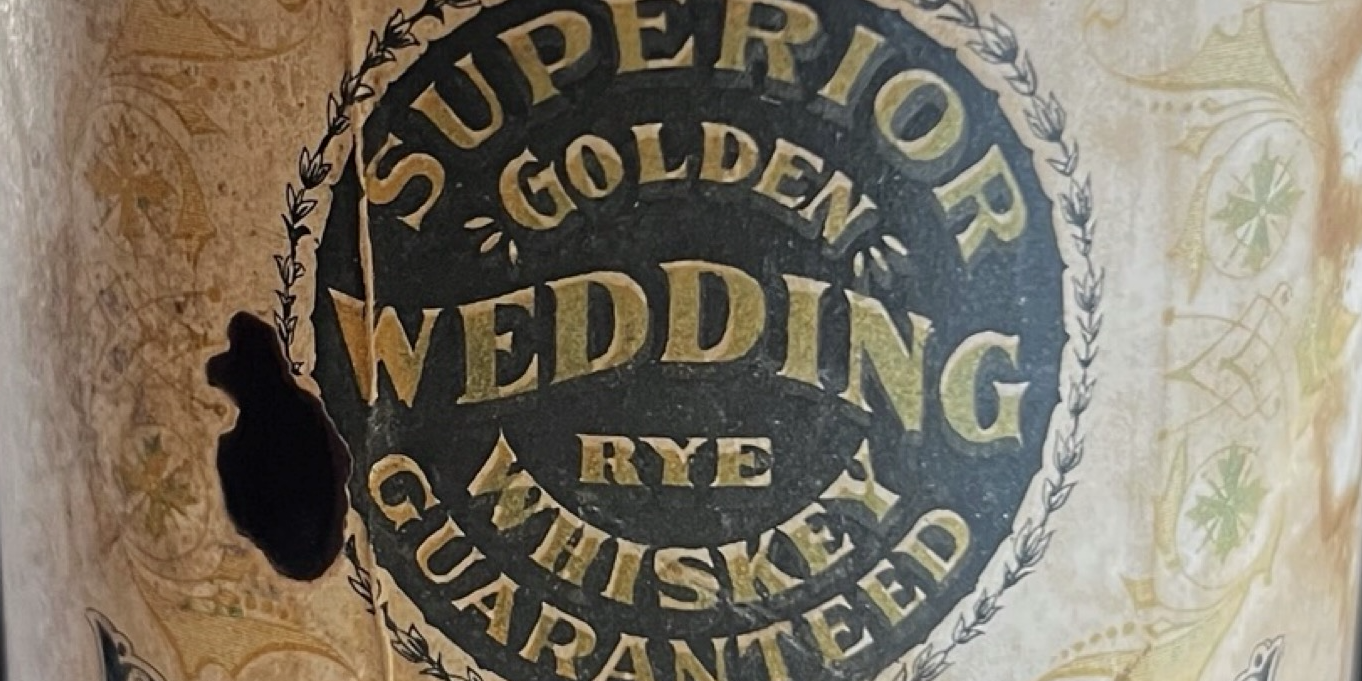
The label reads cleanly: Golden Wedding Superior Golden Wedding Rye Whiskey Guaranteed / Pure Rye Whiskey. To make things even more interesting, someone penciled the date May 1895 at the very bottom of the label.
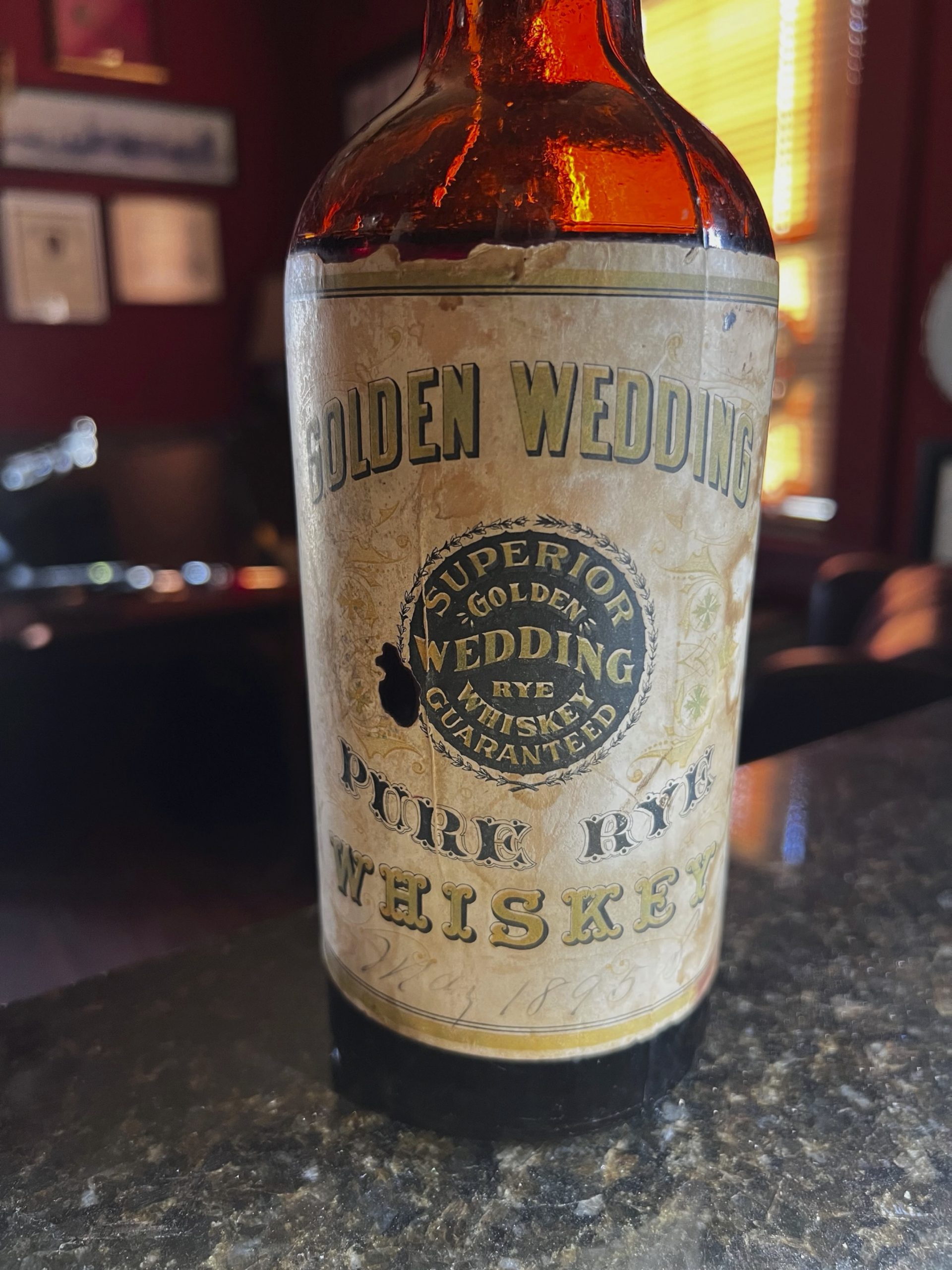
While the spelling is precise and the date anchors it deep in the Gilded Age, a closer look at the presentation reveals a fascinating truth: this is almost certainly a period-correct, pre-Prohibition bootleg. Let’s break down the clues.
The Historical Blueprint
Whenever a legendary brand name appears on a bottle without the official corporate markings of its parent distillery, we have to look at the historical context of the era.
-
The “Old Crow” Phenomenon: In the late 19th century, Golden Wedding was a massive, powerhouse name for historic Pennsylvania rye whiskey, originally produced by Joseph S. Finch & Co. Because it was incredibly popular, the name was heavily targeted by independent rectifiers, unscrupulous local grocers, and outright bootleggers. Much like the Old Crow name, rogue operators would print up their own labels to sell generic, cheaper wholesale whiskey under a trusted trademark to guarantee a quick sale.
-
The Missing Pedigree: An official, corporate-sanctioned release from Joseph S. Finch & Co. during the 1890s typically carried distinct factory branding, distillery locations, or specific glass embossments. This bottle leans heavily on the words “Superior” and “Guaranteed Pure” to build trust, but lacks the institutional backing you would expect from the rightful owners of the brand.
-
The Provenance of the Pencil: The handwritten date of “May 1895” tells an incredible story. In the 1890s, before the Bottled-in-Bond Act of 1897 cleaned up national distribution, it was common to buy whiskey by the jug or individual flask straight out of a barrel. An illicit bottler could easily slap these counterfeit labels onto standard glass bottles, fill them with generic rye, and pencil the date at the point of sale.
The Verdict
Kerri, your dad has an incredibly cool piece of American spirits history, but it isn’t an official Finch distillery release. Instead, it represents a genuine, late-19th-century “bootleg” or unauthorized merchant bottling.
To a history buff, these period-correct counterfeits are sometimes even more interesting than official releases. They serve as a physical record of the rampant trademark piracy and unregulated blending that defined the American liquor market right before the government stepped in to regulate it. It’s a fantastic, rare cultural time capsule of how people actually drank in 1895.
Thank you, Kerri, for sharing this brilliant historical puzzle with the community!
Have a mysterious vintage bottle with an unusual label?
If you’ve found an old spirit and want to separate historical fact from fiction, I’m here to help look for the clues. Head over to our Whiskey Bottle Evaluation Page to submit your photos for a free analysis.