Community Finds: Corey’s Unopened 1926 “Old Thompson” Medicinal Pint straight from a Military Footlocker
Every now and then, a discovery surfaces that feels less like a simple bottle hunt and more like unearthing a genuine time capsule. Reader Corey from Maine recently reached out with an unbelievable story: he acquired an intact, complete bar setup that had been perfectly preserved inside a military footlocker for the last 65 years.
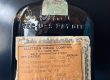
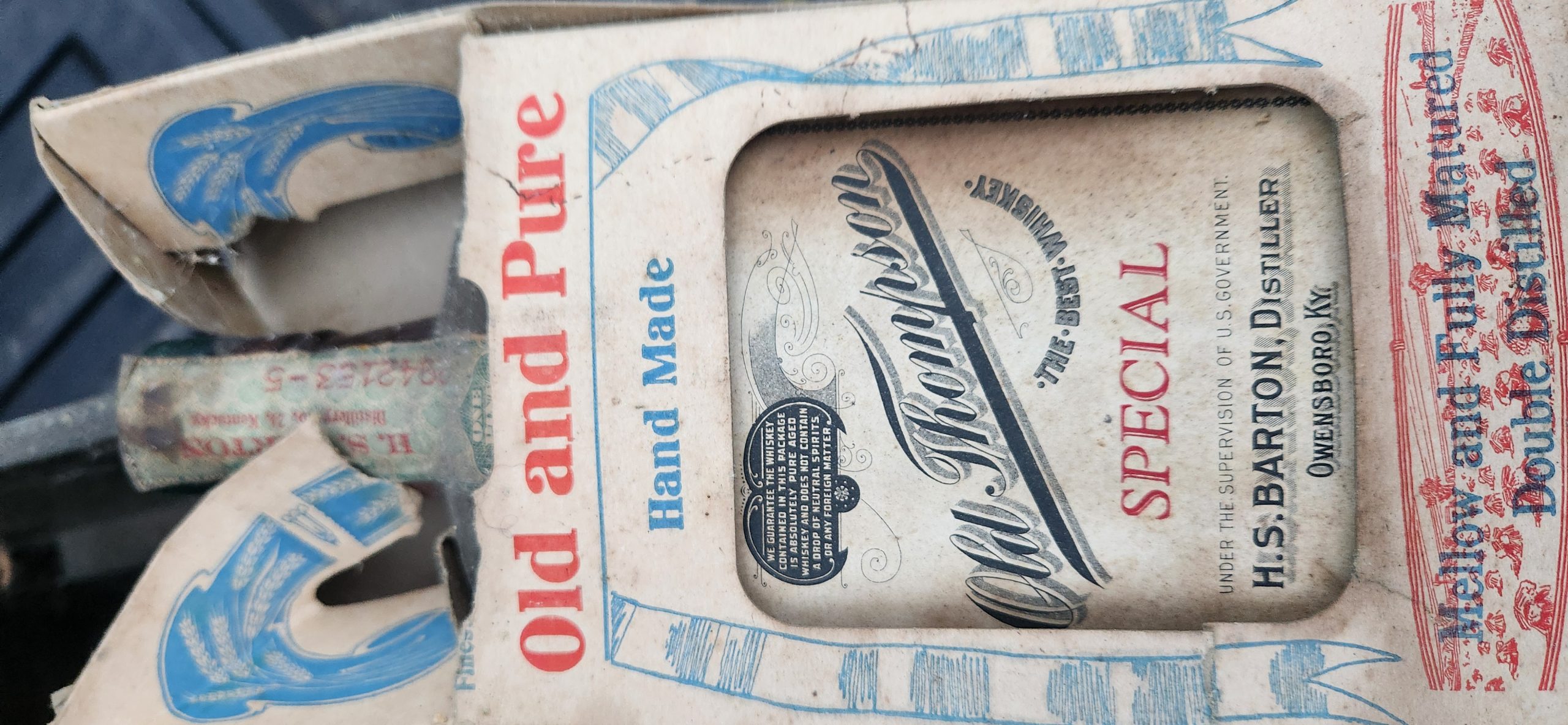
Tucked safely inside that footlocker was an absolute heavyweight of Prohibition-era pharmacy history: an immaculate, unopened pint of Old Thompson “Special” Whiskey, complete with its original, ultra-rare die-cut presentation carton.
The Brother-in-Law Partnership Behind Glenmore
To understand the pedigree on display here, you have to look at the name emblazoned across the bottom of the main label: H.S. Barton, Distiller out of Owensboro, Ky.
Henry Shepard “Harry” Barton was arguably one of the most highly educated, technically advanced master distillers in pre-Prohibition America, holding degrees in both engineering and law. In 1901, his brother-in-law, a spirits merchant named James Thompson, purchased the old Monarch Distillery in Owensboro and renamed it The Glenmore Distillery Company. Thompson immediately put Barton in complete operational control.
Together, they turned Glenmore into one of the largest and most respected distilling powerhouses in Kentucky. While the distillery produced iconic household names like Kentucky Tavern, James Thompson named his absolute flagship brand directly after himself: Old Thompson.
A Loophole in the Dry Era
When National Prohibition forced distilleries across the country to drop their fires in 1920, Glenmore was one of a select few firms granted a coveted federal license to package and distribute remaining warehouse stocks for strictly “medicinal purposes”.
Because the government took total control over how these remaining stocks were monitored, many medicinal expressions bottled at Glenmore during the 1920s were explicitly credited directly to Barton’s name.
Decoding Corey’s Footlocker Find
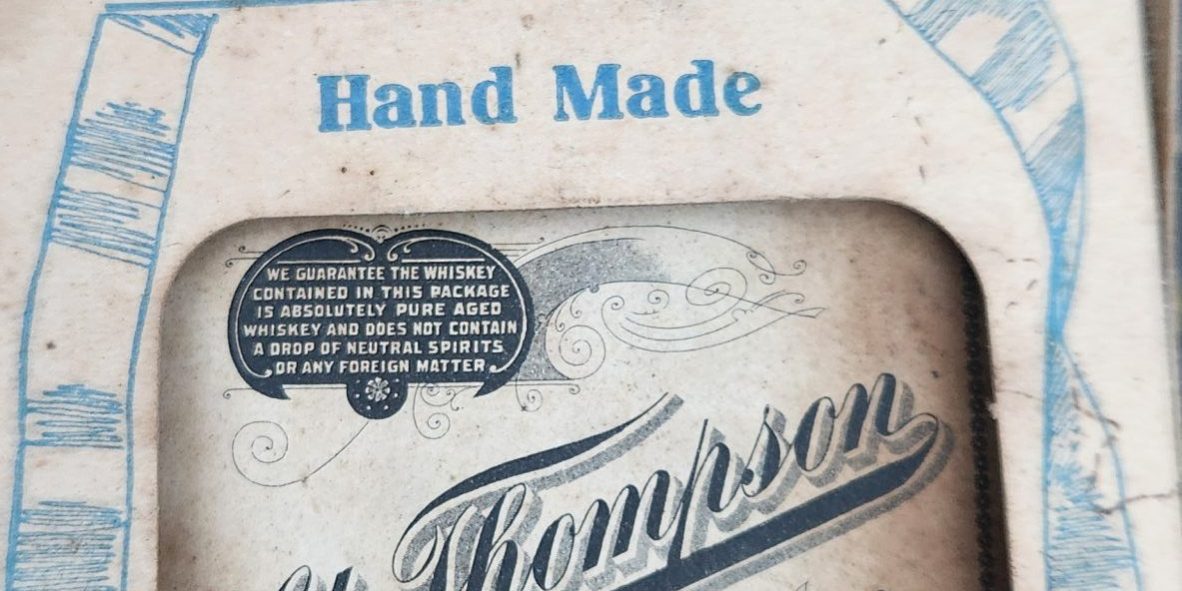
By examining the crisp details preserved inside the carton window of , we can extract the exact historical timeline of this specific bottling:
-
The Age & Vintage: Though the exact paper dates are obscured on the tax strip, this exact “H.S. Barton” medicinal iteration was distilled in the Fall of 1916 and aged for 10 to 11 full years before being bottled in the Fall of 1926.
-
The Purity Guarantee: The elegant filigree script on the top left of the label states the legal promise of the era: “We guarantee the whiskey contained in this package is absolutely pure aged whiskey and does not contain a drop of neutral spirits or any foreign matter.”
-
The Federal Seal: Peeking through the top cutout of the carton is a pristine, green federal Bottled-in-Bond tax stamp, confirming it was bottled under the direct supervision of the U.S. Government at 100 Proof.
The Miracle of the Cardboard Carton
Most medicinal pints recovered today are found as bare glass—their fragile paper cartons having succumbed to moisture, tearing, or trash bins decades ago. Finding an “Old Thompson” pint still snuggled inside its original, graphic-heavy cardboard sleeve with the top flaps intact is an exceptional rarity.
The dark, dry environment of a locked military footlocker acted as the ultimate defensive bunker, protecting the paper from ambient light and rot for over six decades.
A massive thank you to Corey for giving us a peak inside this incredible, military-grade time capsule!
Have an antique bottle hiding in a family chest or trunk?
Whether it’s a Prohibition-era medicinal pint, a pre-Prohibition survivor, or a unique post-Repeal bottle, we want to help you unearth its history. Drop your photos over on our updated Whiskey Bottle Evaluation Form to get a historical breakdown!