Community Finds: Kirk’s Prohibition Staple — A 13 “Summers” Old J.A. Dougherty’s Sons Pure Rye (Distilled by Overholt)
While some of our community features focus on mythical “lone survivors” that are completely undocumented, today’s submission from reader Kirk covers a bottle that is a legendary staple among vintage spirits collectors. Kirk sent in an incredibly well-preserved example of J.A. Dougherty’s Sons Pure Whiskey.
Kirk is right on the money: while this brand is one of the more frequently seen survivors from the Prohibition era, it remains an absolute masterclass in Pennsylvania distilling history—and a delicious example of what “medicinal” whiskey actually was.
The Philly Pedigree & The “Summers Old” Quirk
Founded in 1849 by an Irish immigrant along the Delaware River in Philadelphia, J.A. Dougherty’s Sons built a reputation for crafting magnificent, pure Monongahela-style ryes. By the time National Prohibition forced the country dry in 1920, the brand was a household name, making it an ideal target for medicinal distribution companies.
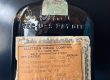
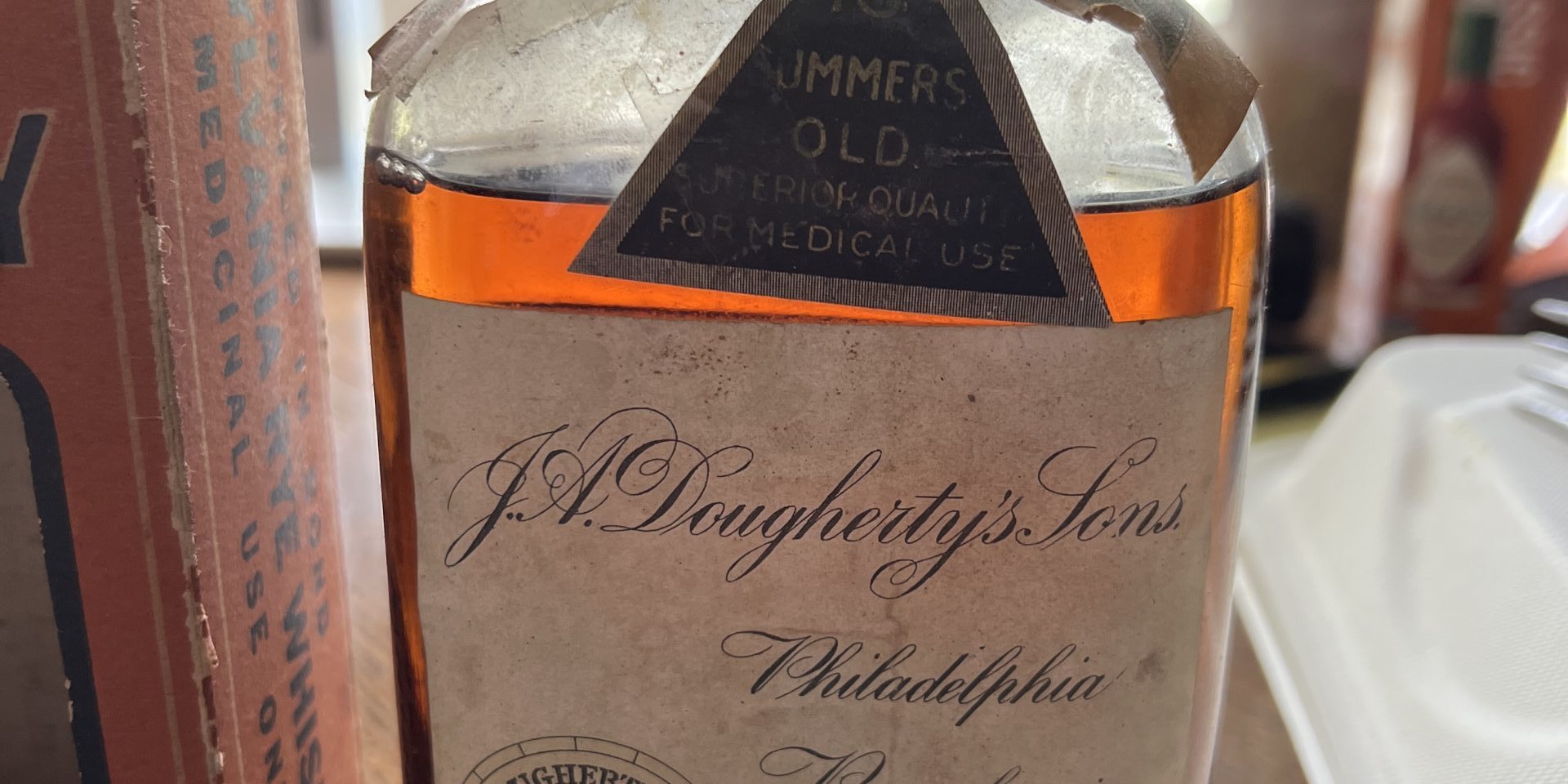
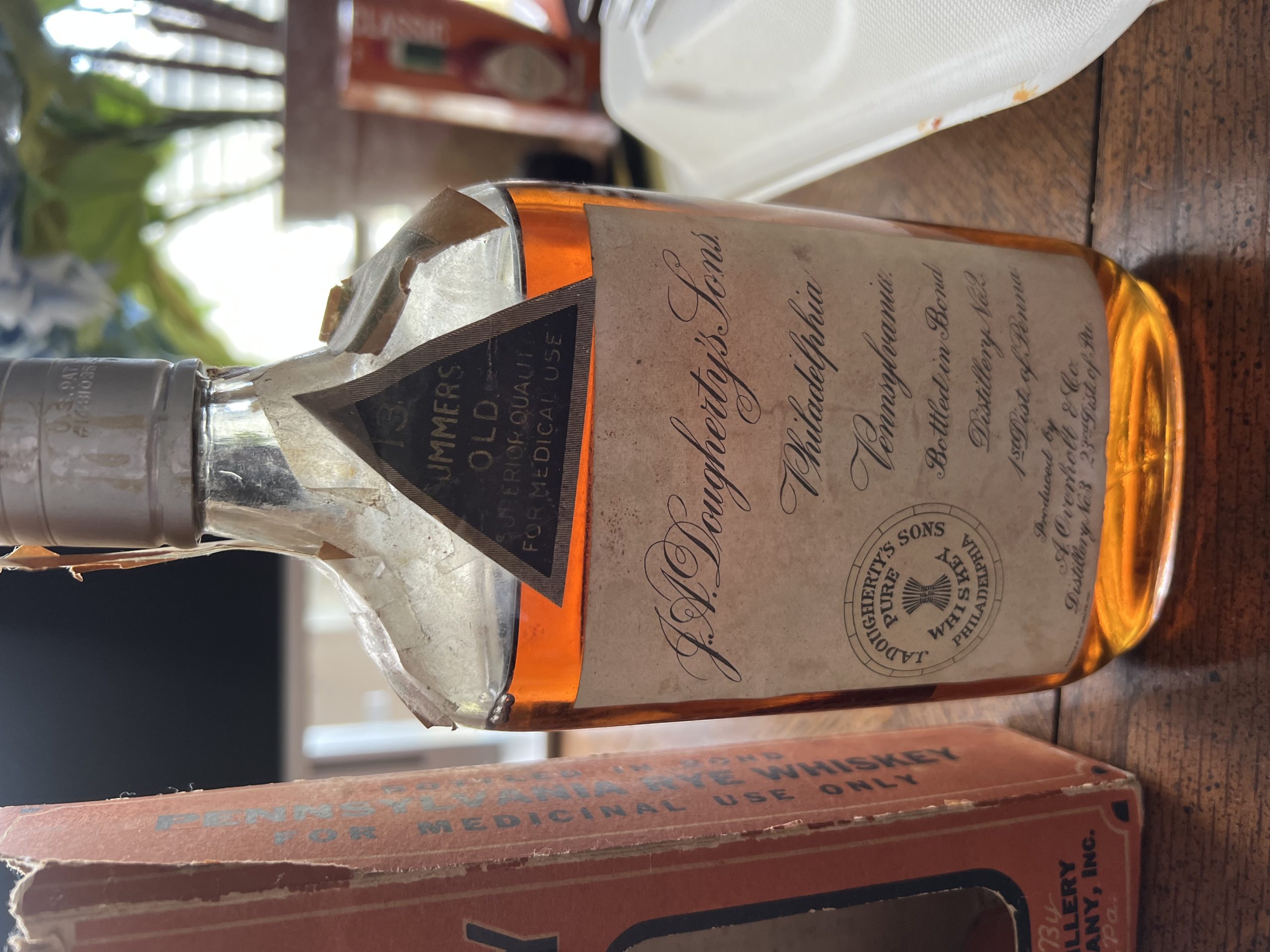
The most distinctive feature of Kirk’s bottle is the prominent, dark triangular neck tag, which declares the liquid to be “13 Summers Old.”
Rather than standard years, several historic distillers used “summers spent in wood” as an age statement. This poetic affectation wasn’t just marketing flair; it heavily implied that the whiskey had endured the intense, barrel-expanding heat of thirteen distinct Pennsylvania summers, accelerating the extraction of deep sugars and oak tannins from the charred barrels.
The Inter-Distillery Chaos of Prohibition
If you look closely at the fine print on the lower half of the main label, you’ll see a fantastic historical contradiction:
-
The Bottler: “Bottled in Bond Distillery No. 2, 1st Dist. of Penna.” (The original J.A. Dougherty plant in Philadelphia).
-
The Producer: “Produced by A. Overholt & Co. Distillery No. 3, 23rd Dist. of Pa.“ (The legendary Broad Ford, PA plant).
This layout perfectly illustrates the chaotic world of Prohibition concentration warehouses. Under the Concentration Act of 1922, the government consolidated millions of gallons of aging whiskey from isolated rural distilleries into centralized, heavily guarded hubs.
During this shuffle, the companies licensed to bottle medicinal spirits frequently ran out of their own native liquid. As a result, they began bottling rival stocks under their own house labels. Kirk’s bottle tells us that this specific batch was distilled pre-Prohibition by Overholt, but ultimately transferred, aged, and bottled under the famous Dougherty label for prescription sales.
Excellent Vintage Presentation
As shown, the physical presentation of this bottle is exceptional:
-
The Box: To the left of the glass, the original, vibrant orange-and-white cardboard carton survives, clearly displaying the legal designation: “Pennsylvania Rye Whiskey For Medicinal Use Only.”
-
The Fill Level: The original metal screw cap has successfully held its seal for nearly a century. The liquid level sits flawlessly high at the shoulders of the flask, indicating virtually zero evaporation.
While it may be a more common brand for vintage hunters to encounter, finding a complete package with an intact box, flawless labels, and a high fill line makes Kirk’s 13-summer-old pint a phenomenal piece of history. Thank you for sharing it with us, Kirk!
Have a mysterious bottle that turns up zero Google results?
Don’t let a “ghost brand” stop you from discovering its history. Send your photos over to our Whiskey Bottle Evaluation Form and let’s decode the clues hidden in the glass together!