Community Finds: Daron’s Birthyear Time Capsule — A 15-Year-Old Prohibition “Old McBrayer” (1917/1932)
There is something profoundly special about holding a bottle of whiskey that directly anchors a branch of your family tree. Reader Daron reached out to share an incredible piece of liquid history left behind by his late father. Daron’s dad picked up this pint because it was packaged in 1932—the exact year he was born.
As a bourbon fan fascinated by American history, Daron has come to the right place. This isn’t just an old bottle; it is a masterclass in pre-Prohibition distilling heritage and the frantic logistics of the dry era.
The Distillery History: Judge W.H. McBrayer’s Legacy
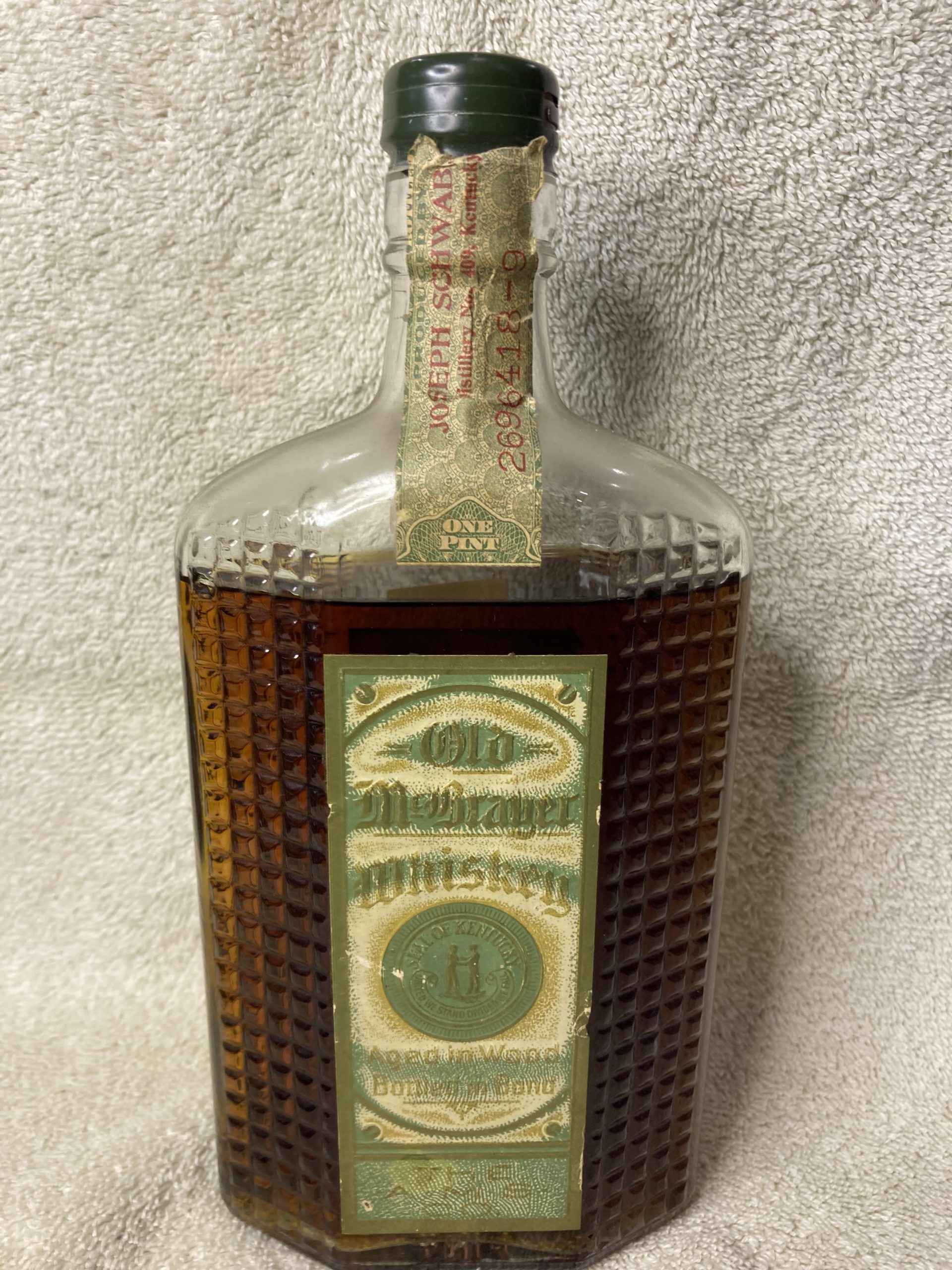
The label on the front proudly bears the name Old McBrayer. To vintage bourbon enthusiasts, this name is synonymous with the absolute pinnacle of 19th-century Kentucky distilling craftsmanship.
The brand was founded by Judge William H. McBrayer in 1848 in Lawrenceburg, Kentucky (Distillery No. 44, 8th District). Judge McBrayer was a perfectionist who ran a remarkably meticulous operation along the banks of Cedar Creek. He used copper pot stills and adhered to rigid quality standards at a time when much of the American whiskey market was flooded with rectified, adulterated spirits.
By the late 1800s, Old McBrayer was recognized globally as a premium Kentucky bourbon, famously served in elite hotels and even exported across Europe. When Judge McBrayer passed away, the distillery continued operating under elite management until the onset of National Prohibition in 1920 legally forced the mash cookers to go cold.
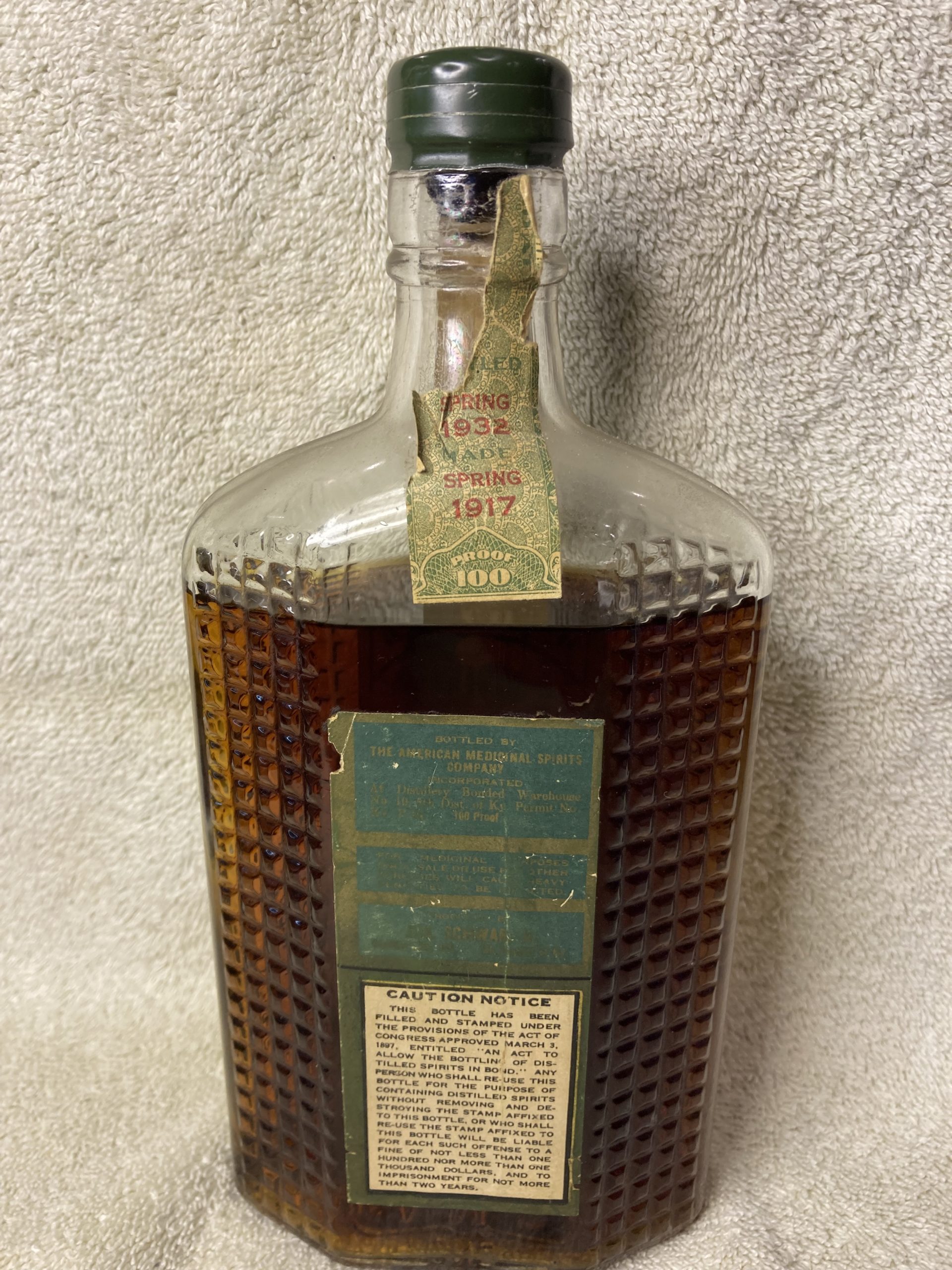
Reading the Stamp: The 1917/1932 Timeline
While Daron’s father bought the bottle because of the 1932 date, the green federal Bottled in Bond tax stamp visible in the photos tells the full story of its journey through the Volstead Act:
-
Made: Spring 1917. This whiskey was distilled in the spring of 1917, just as the United States was entering World War I. This was the final golden crop of whiskey produced before wartime grain restrictions and Prohibition halted commercial distilling.
-
Bottled: Spring 1932. The whiskey sat quietly in a government-supervised warehouse for an incredible 15 years before it was finally glassed.
-
The Producer: The front of the stamp notes it was produced by Joseph Schwab (Distillery No. 409, 5th District of Kentucky). This indicates that by 1917, the production of the brand had shifted to Schwab’s facility, but retained the strict, traditional McBrayer recipe parameters.
The American Medicinal Spirits Connection
Flip the flask over to the back, and you’ll spot the unmistakable green back label of The American Medicinal Spirits Company (AMS).
When Prohibition struck, individual distillers weren’t allowed to sell their stocks. Under the Concentration Act of 1922, the federal government forced the consolidation of all remaining bourbon into a few high-security warehouses. AMS bought up the rights to elite legacy brands like Old McBrayer and systematically bottled these rich, pre-Prohibition stocks to supply the nation’s pharmacies with 100-proof prescription medicine.
Addressing the “Short” Fill Level (Ullage)
Daron correctly noted that the liquid level looks a bit short. We can see the fill line rests right at the top of the diamond-patterned shoulders of the glass, rather than up in the neck.
For a bottle that has spent 94 years in glass, this is actually completely normal and expected. Even though the cork and cap appear fully intact, cork is a natural, porous bark. Over nearly a century, microscopic amounts of ambient air slip past the seal, causing the water and alcohol to slowly evaporate—a phenomenon collectors call “ullage” or the “angels’ share” of the bottle. Given its immense age, a fill level at the shoulder line is still considered highly stable and historically acceptable for display.
Daron’s father left behind an absolutely beautiful, highly coveted piece of Kentucky distilling history that represents the final chapter of pre-Prohibition bourbon craftsmanship.
Have a vintage bottle that connects to a meaningful family birthyear or milestone?
Whether your bottle has an immaculate high fill or has lost a little to the angels over the decades, we can help you trace its distillery roots and historical significance. Send your pictures over to our Whiskey Bottle Evaluation Form and let’s uncover your family’s liquid legacy together!