Community Finds: Brian’s Legendary Prohibition “Whiskey in a Tin Can” — An Unopened Canadian Chicken Cock Pure Rye
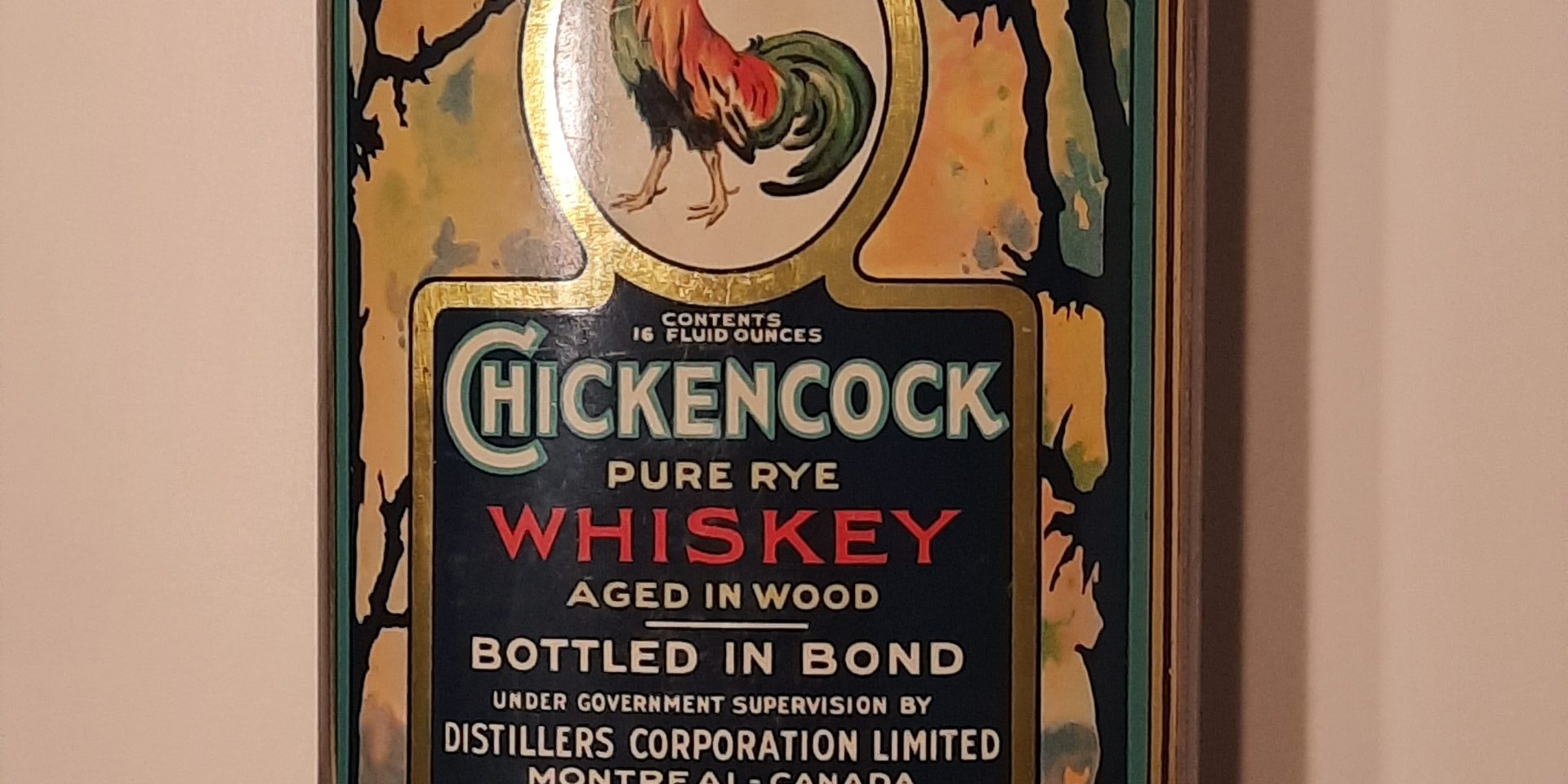
Every once in a while, a piece of spirits history surfaces that feels more like a Hollywood prop than a century-old relic. Reader Brian sent in an absolute holy grail for Prohibition-era novelty collectors: an original, unopened, pristine tin canister of Chicken Cock Pure Rye Whiskey.
As Brian rightly notes, this isn’t one of the modern commemorative revival bottles you see on store shelves today. This is a genuine, museum-grade survivor from the depths of the dry era—famed across history as the original “Whiskey in a Tin Can.”
The Kentucky Exile to Montreal
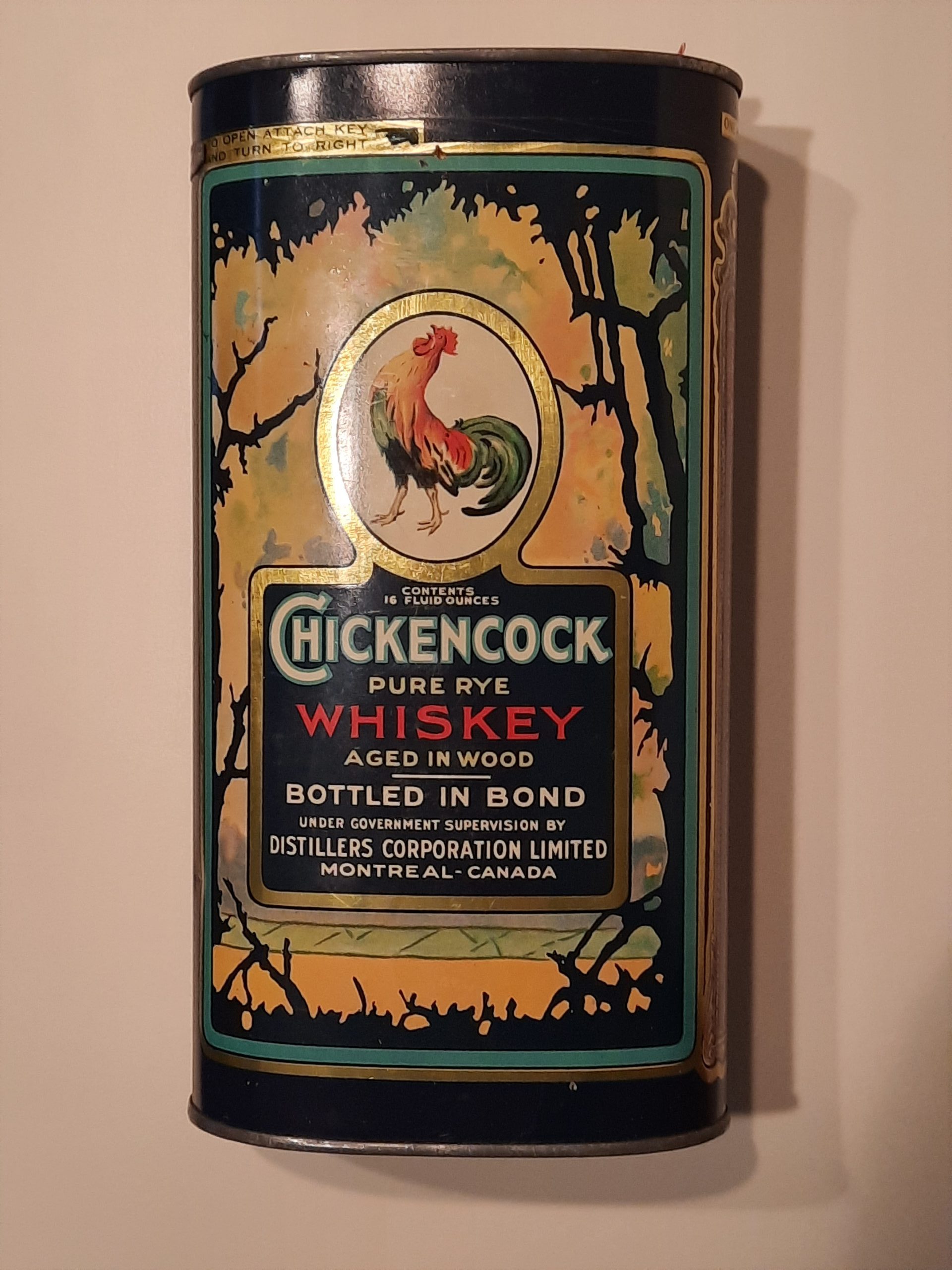
To understand the story lithographed onto the front of the tin, you have to look at the manufacturer listed at the bottom: “Distillers Corporation Limited, Montreal-Canada.”
Chicken Cock was originally established in Paris, Kentucky, back in 1856 and grew into one of the state’s most beloved old bourbon brands. However, when National Prohibition went into effect in 1920, the distillery was forced to shutter its Kentucky home. Rather than letting the brand die, the owners shifted production across the border to Canada, where they partnered with Distillers Corporation Limited in Montreal (a massive distilling hub operated by the Bronfman family, which would later become Seagram).
From Canada, this pure rye whiskey was legally produced, aged in wood, and “Bottled in Bond” under Canadian government supervision. From there, vast quantities of these tins were famously smuggled back across the border into the United States via rum-runners, finding a welcome home in the underground speakeasies of New York and Chicago.
Why a Tin Can?
The choice of packaging was pure tactical genius for the era. During Prohibition, transporting glass bottles was a noisy, fragile, and highly conspicuous endeavor for bootleggers. Packaging a full pint (16 Fluid Ounces) of whiskey inside an opaque, hermetically sealed tin canister offered several massive advantages:
-
Durability: The tins could be packed tightly into crates, dropped, or thrown into the trunks of rum-running cars without any risk of breaking or leaking.
-
Camouflage: To an unsuspecting observer or a hurried law enforcement officer, a crate of these oblong cans looked exactly like a standard shipment of canned tomatoes, sardines, or industrial cooking oil.
-
The Speakeasy Routine: In underground clubs, bartenders would famously slice these tins open right at the table to guarantee to nervous patrons that the liquid inside hadn’t been cut or poisoned with industrial wood alcohol by local bootleggers.
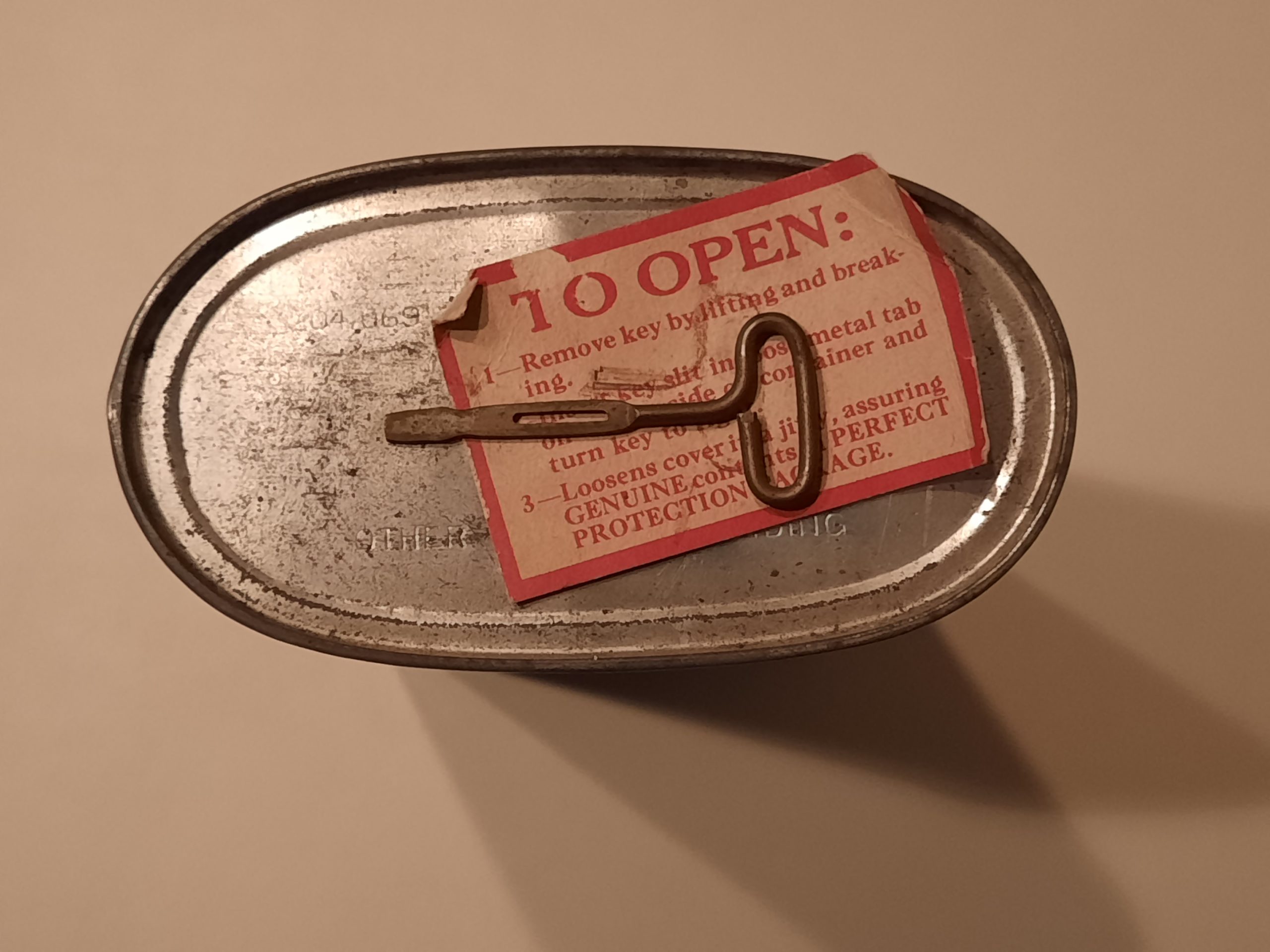
The Holy Grail Feature: The Untouched Key
What elevates Brian’s specific tin into an elite tier of historical preservation is captured perfectly on the top of the tin.
Most of the surviving Chicken Cock tins found in antique shops today are completely empty, having been opened and discarded a century ago. On the top of Brian’s canister, however, the original metal winding key is still completely taped down and intact over its red paper opening instructions. The stamped production number “204 869” remains sharply visible on the sealed tin lid.
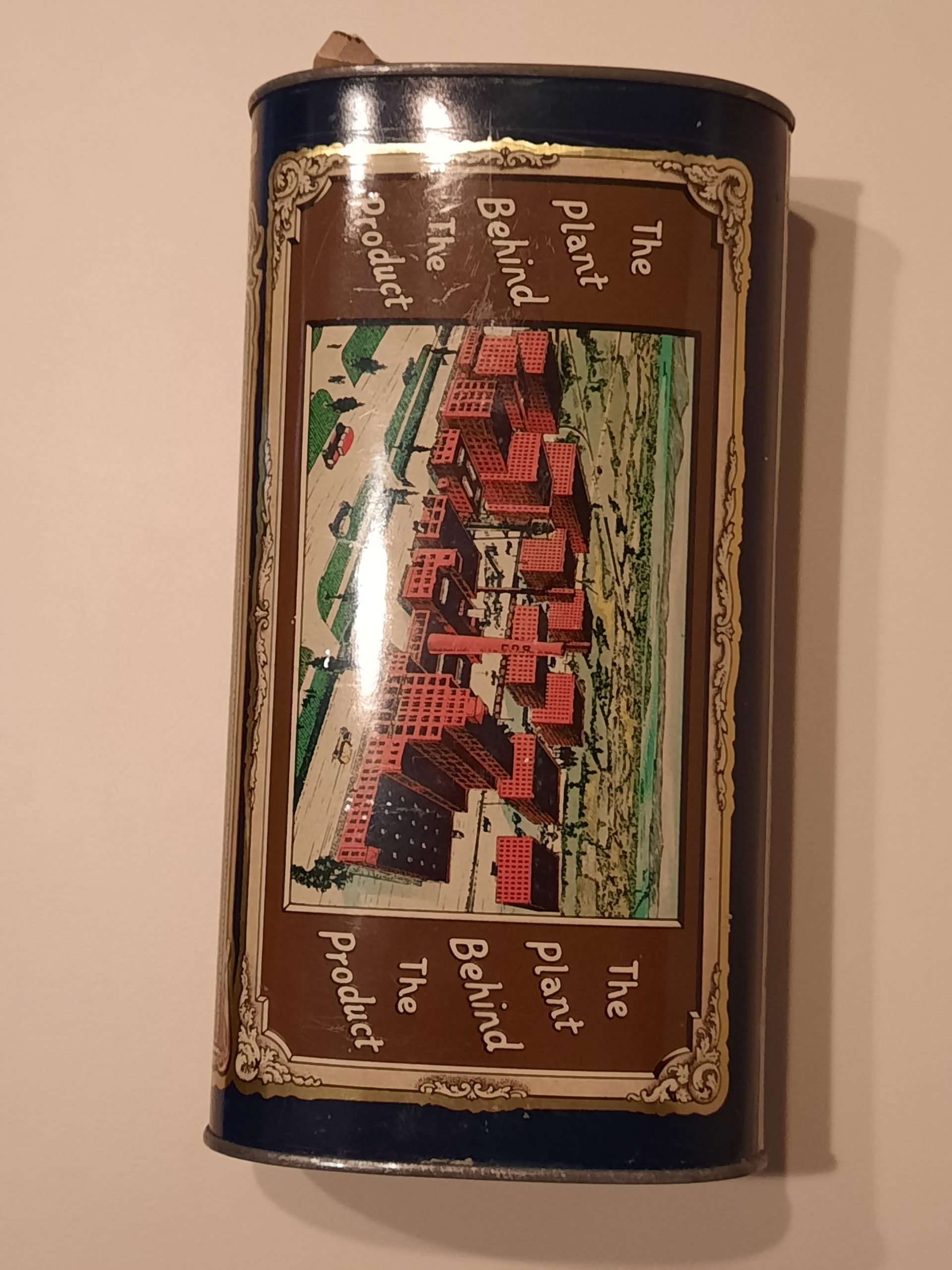
Flipping the container over to the back, the lithograph proudly displays an intricate illustration of the massive Montreal facility titled “The Plant Behind The Product.” The brilliant colors, the completely untouched seal, and the full liquid weight make this one of the finest surviving examples of Canadian-American smuggling history in existence.
A massive thank you to Brian for sharing this absolute masterpiece of Prohibition ingenuity with the community!
Found a vintage spirit hiding inside an antique tin or unusual container?
Don’t let a unique piece of industrial packaging keep its secrets forever. Snap a few photos of the labels and seals, and send them over to our Whiskey Bottle Evaluation Form so we can help you decode the history waiting inside!