Community Finds: Carly’s “Old Judge Taylor” — The Ultimate Pre-Pro Naming Rip-Off
If you ever needed definitive proof that the pre-Prohibition liquor landscape was the wild, unregulated West, this submission from Carly is it. Every now and then, a bottle comes along that makes you laugh out loud at the sheer audacity of early 20th-century spirits merchants.
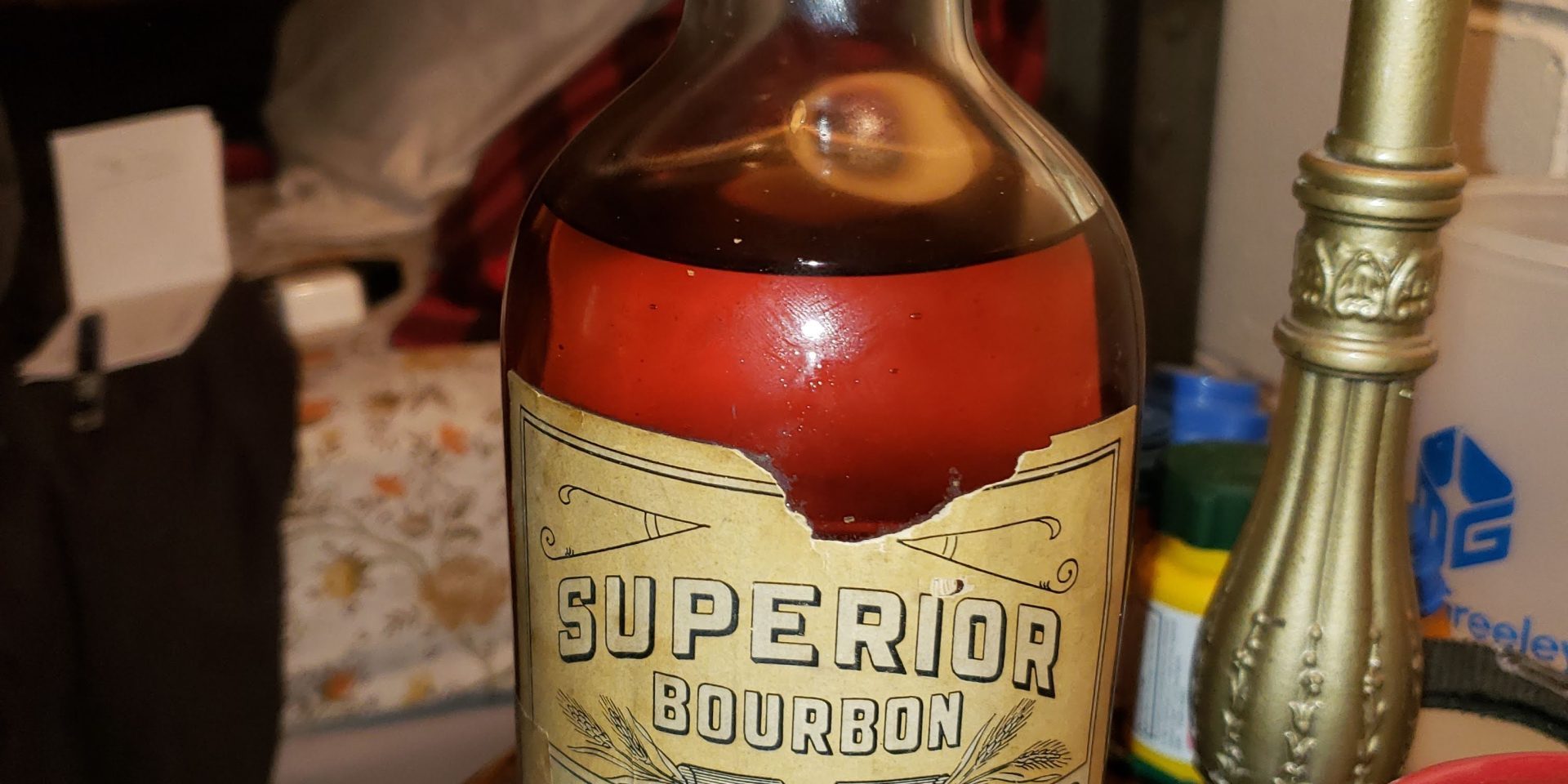
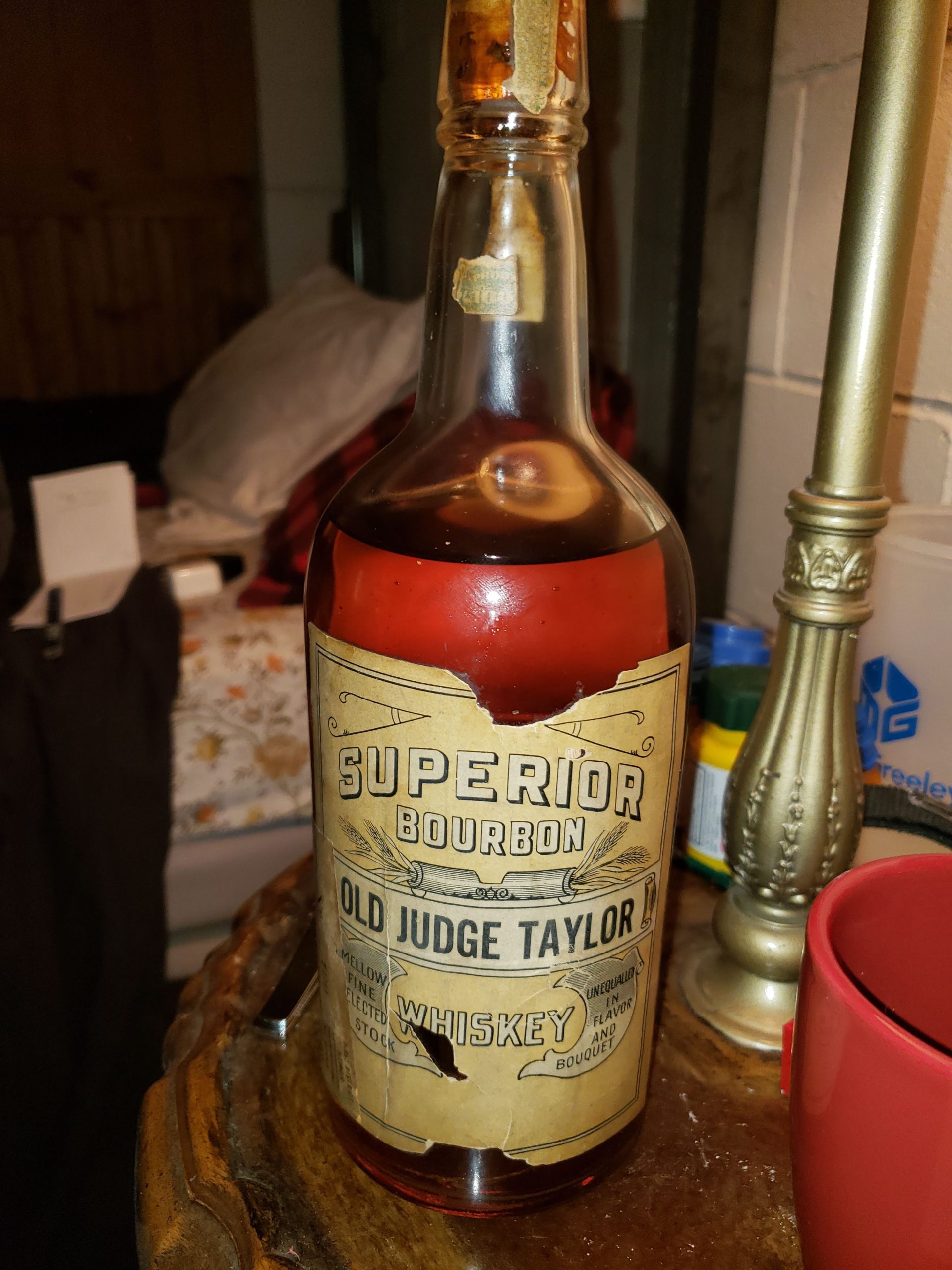
It isn’t Colonel E.H. Taylor’s world-famous Old Taylor. It isn’t the prominent Kentucky brand Old Judge. It is—naturally—“Old Judge Taylor.”
The Art of the Pre-Pro Name Mashup
Before the Federal Alcohol Administration (FAA) Act of 1935 forced brands to tell the absolute truth on their labels, wholesale dealers could get away with murder. If you were a merchant trying to move generic bulk bourbon, the easiest trick in the book was “co-branding by confusion.”
By mashing up the names of two highly respected, top-tier brands, you instantly created an illusion of premium pedigree. To an unsuspecting consumer walking into a saloon, the bold lettering on the label checked every psychological box. It promised a “Mellow, Fine, Selected Stock” with an “Unequalled Flavor and Bouquet”—leveraging the prestige of “Judge” and “Taylor” without paying a single dime to either distillery.
The Real Prize: A Rare War Revenue Stamp
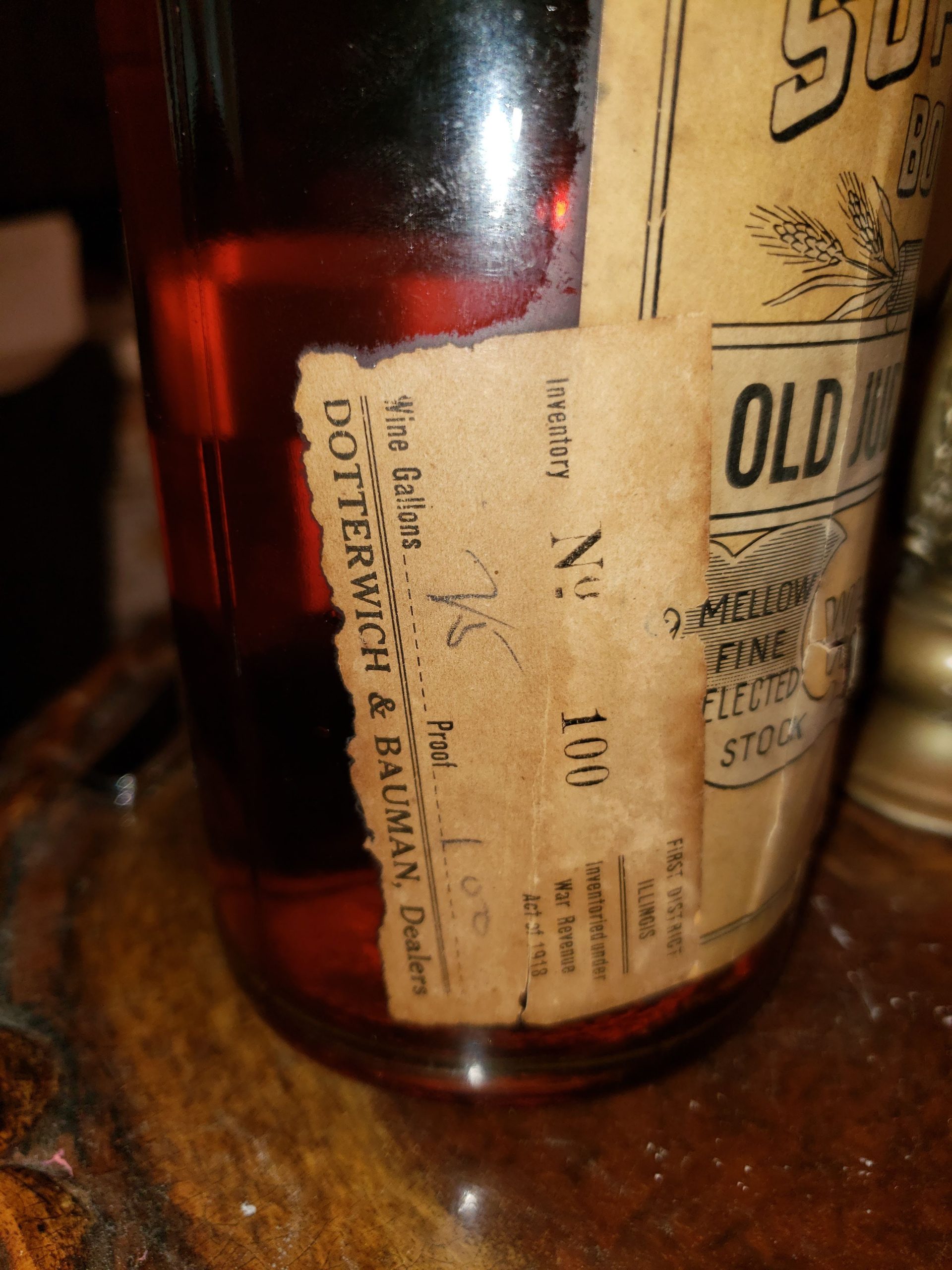
While the front label is a masterclass in trademark infringement, turning the bottle around reveals an absolute holy grail for whiskey historians.
In the second photo you can see a crude, hand-numbered paper strip pasted along the side of the bottle. This isn’t a standard distillery label; it’s an official First District Illinois tax stamp issued under the War Revenue Act of 1918.
When the United States entered World War I, the federal government needed massive amounts of capital to fund the military. The War Revenue Act slapped heavy emergency floor taxes on existing, stored liquor stocks. To prove they had paid the tax, dealers had to take physical inventory of every drop they owned.
This specific stamp gives us incredible, verified data points straight from the twilight of the pre-Prohibition era:
-
The Dealers: It was inventoried by Dotterwich & Bauman, Dealers, operating out of the First District of Illinois.
-
The Proof: It is hand-notated at 100 Proof.
-
The Volume: The “Wine Gallons” fraction shows 1/5, meaning this is a standard “fifth” bottle, a common commercial size of the era.
Finding a full, sealed bottle that survived the War Revenue Act of 1918 and the entire duration of Prohibition is spectacular on its own. Finding one that perfectly preserves the shameless, hilarious marketing tactics of Chicago-area rectifiers makes Carly’s bottle a true museum-grade favorite.
A massive thank you to Carly for sharing this incredible piece of outlawed history!
Have a weird or mysterious antique bottle?
If you’ve found an old bottle with a confusing name, a strange tax stamp, or a label that doesn’t quite seem to add up, I want to see it! Head over to our Whiskey Bottle Evaluation Page to upload your photos, and let’s decode its true history.