Community Finds: Mark’s Outlawed “Old Crow” — A Chicago Bootlegger’s Masterpiece?
Every once in a while, a submission lands in my inbox that doesn’t just show off an old bottle—it pulls back the curtain on the gritty, wild-west era of early 20th-century spirits marketing. A reader named Mark sent in some incredible photos of a full quart of Old Crow Whiskey (Spring 1908), but this isn’t your standard distillery bottling. It is a prime, textbook example of a major trademark being outright hijacked.
The Anatomy of a Pre-Pro Trademark Hijacking
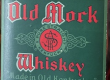
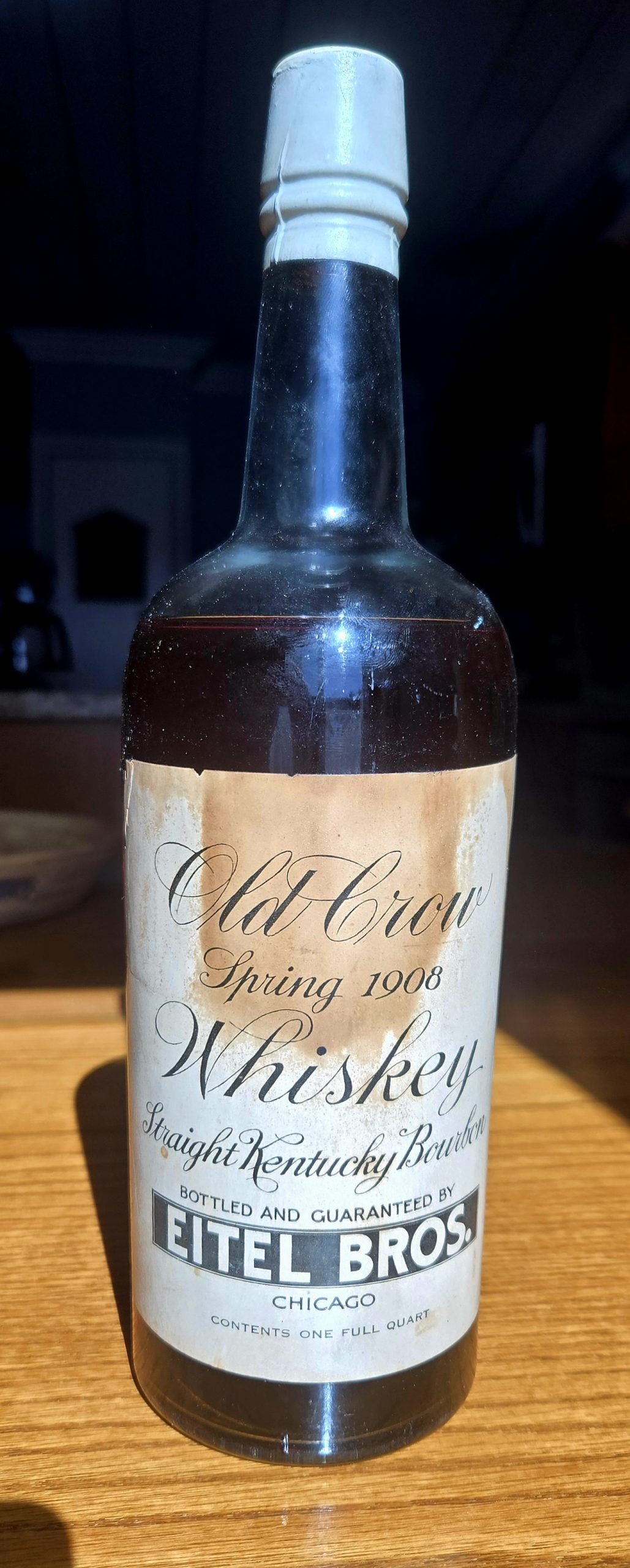
If you look at the main label in, the script typeface elegantly screams “Old Crow.” To a casual consumer walking into a Chicago tavern or liquor shop in the early 1900s, this looked exactly like the premium, world-famous Kentucky straight bourbon distilled by W.A. Gaines & Co.
But look closer at the bottom banner: “Bottled and Guaranteed by EITEL BROS. Chicago.”
Before the FAA Act of 1935 tightly regulated labels, wholesale liquor distributors wielded massive power. They routinely bought bulk distillate from various distilleries, slapped highly recognizable, proprietary brand names on the glass, and sold it under their own “guarantee.” W.A. Gaines & Co. fought vicious legal battles for decades trying to protect the “Old Crow” trademark from exactly this type of unsanctioned merchant bottling.
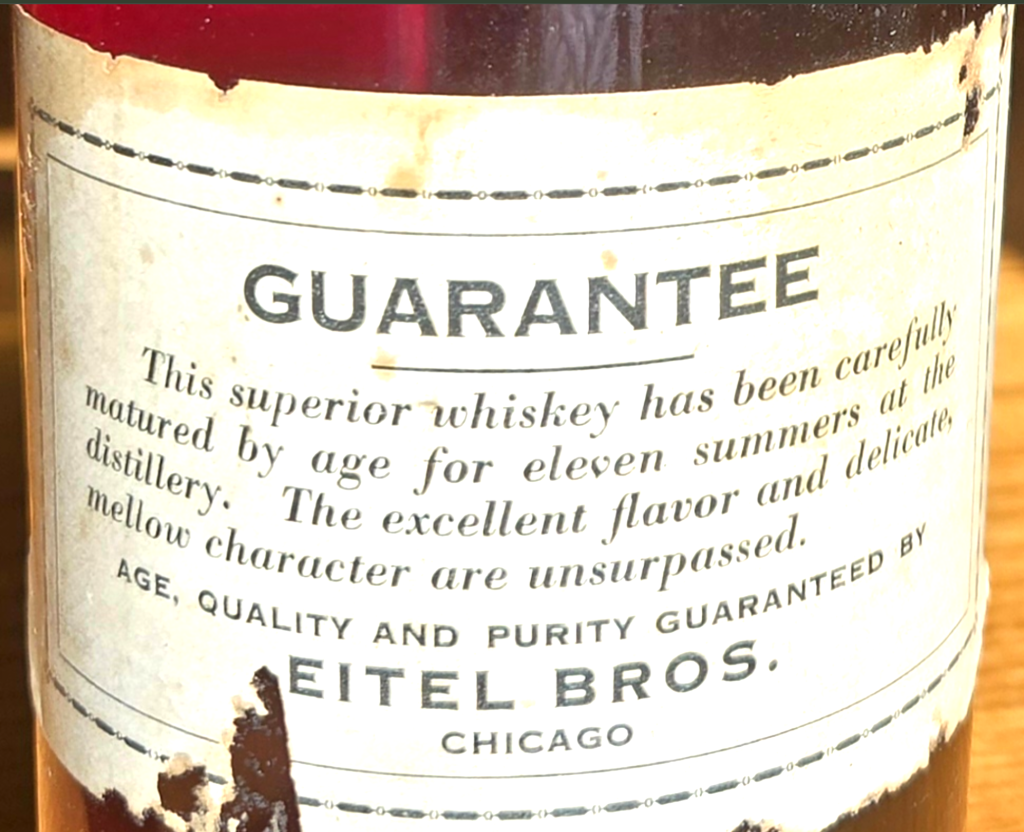
Decoding the Back Label: The Eleven-Year Illusion
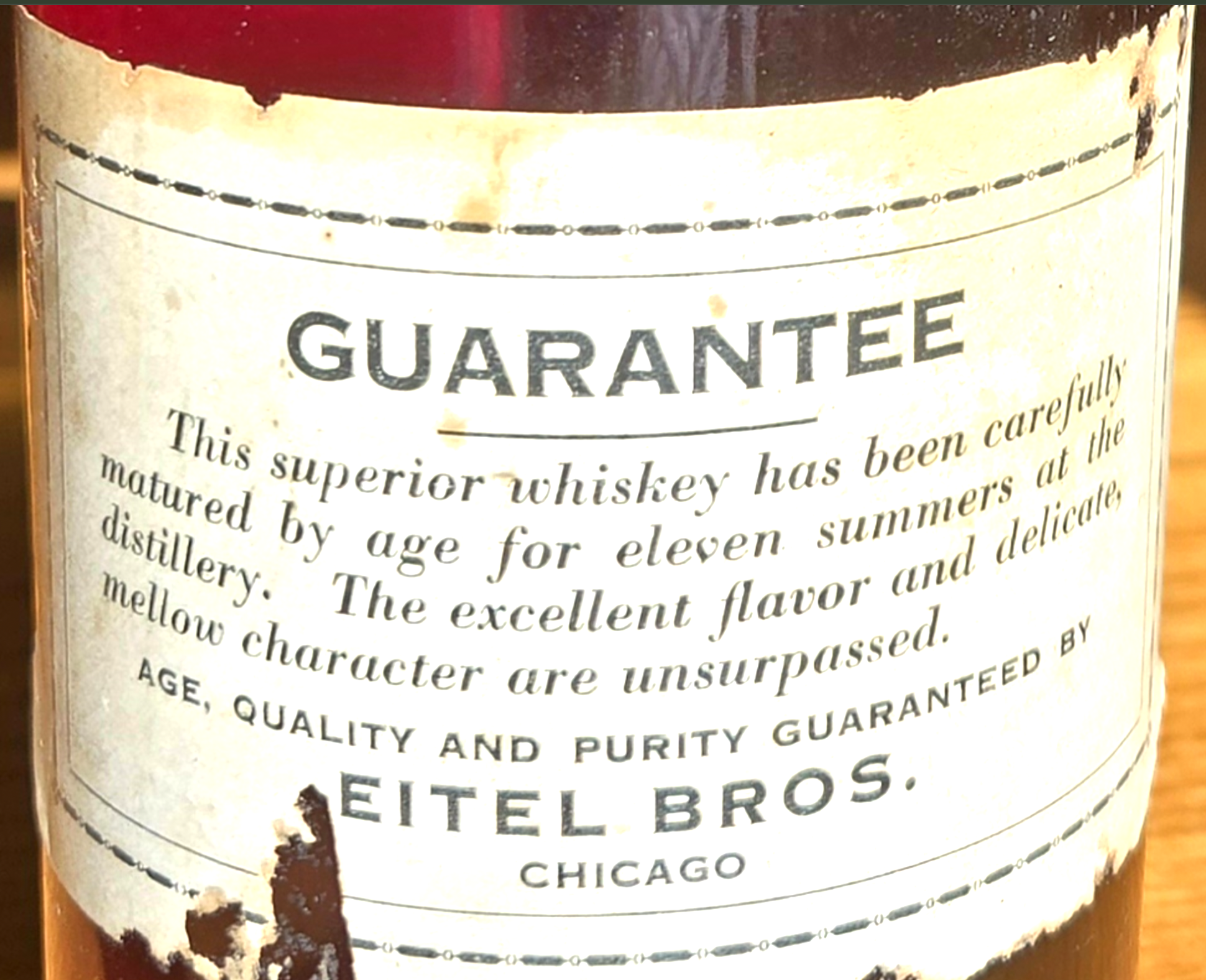
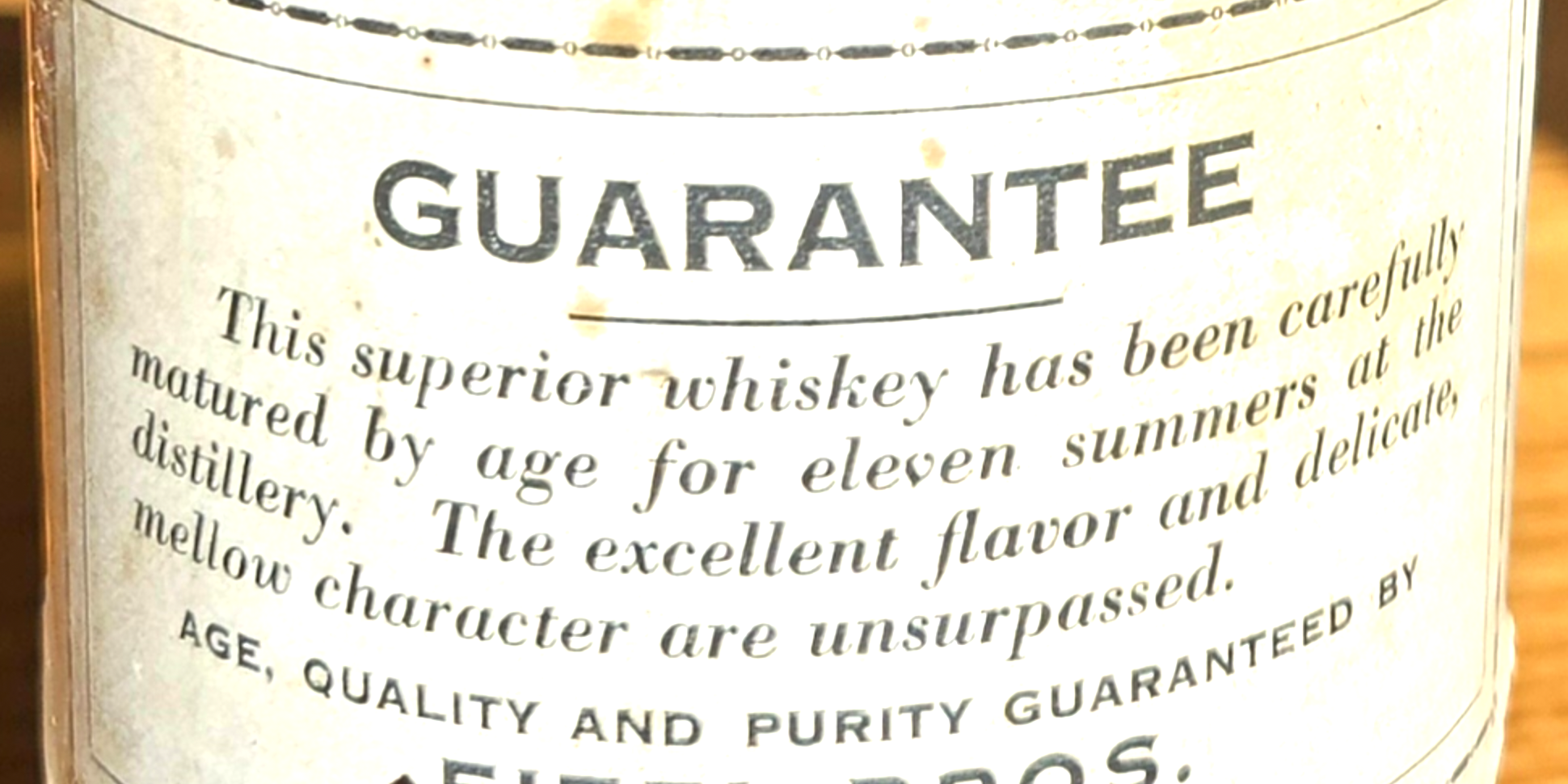
Mark’s second photo shows the back “Guarantee” label, which reads: “This superior whiskey has been carefully matured by age for eleven summers at the distillery.”
If the front label says Spring 1908, and it was matured for eleven summers, that puts the bottling date right around 1919—the chaotic twilight year just before National Prohibition went into full effect.
The text boasts of an “excellent flavor and delicate, mellow character” guaranteed by Eitel Bros. However, because it wasn’t bottled under federal government bond supervision, we only have the Eitel brothers’ word on what liquid was actually poured inside this quart bottle.
The Chicago Connection: Who Were the Eitel Brothers?
Mark did some fantastic digging into the history of the name on the glass. Emil Eitel emigrated from Germany to the United States in 1890, settling in Chicago. By 1891, he teamed up with his brother Charles to form Eitel Brothers, a wholesale wine and liquor import business.
The Eitel brothers were incredibly ambitious. They eventually expanded into the luxury hospitality business, opening the famous Bismarck Hotel and the Marigold Gardens. Yet, through it all, they kept their lucrative wholesale liquor pipeline running.
As it turns out, their massive appetite for liquor storage caught up with them. According to a 1920 Chicago Tribune report unearthed by Mark, the Eitel brothers fell under heavy federal suspicion just as Prohibition dawned. Authorities suspected them of hoarding a massive, illicit stock of liquor valued at a staggering $250,000 (roughly $3.8 million today) and trading it on the black market.
Knowing that history, looking back at this bottle takes on a whole new meaning. This full, sealed quart—bottled right on the cusp of the dry law—might very well be a surviving piece of that legendary, contested $250,000 Chicago stash.
A massive thank you to Mark for sharing this exceptional piece of Chicago liquor history!
Did you uncover a mysterious old bottle?
Whether it’s a genuine distillery bottling, a rare Prohibition medicinal pint, or an outlawed distributor bottle like Mark’s Eitel Brothers quart, I can help you decode the glass. Head over to our streamlined Whiskey Bottle Evaluation Page to send over your details and clear photos!