Every now and then, a piece of whiskey history lands in my inbox that makes me stop everything I’m doing. That happened this week when Chuck from Springhill, Ohio, sent over a look at an awesome specimen of historic American spirits.
The Artifact: Old Mock “18 Summers Old”
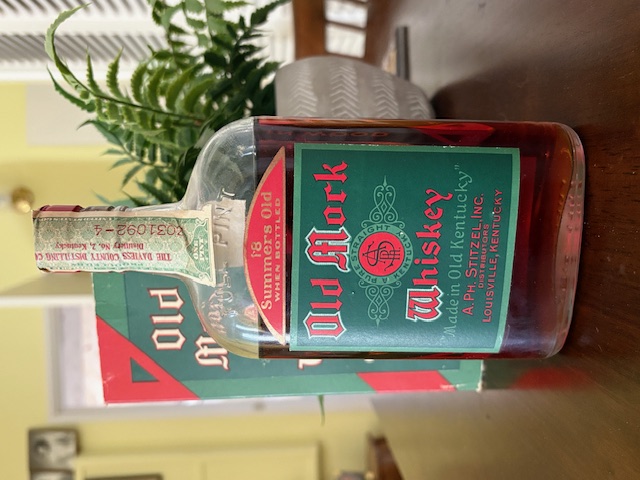
What we are looking at here is a beautiful, Prohibition-era medicinal-style pint of Old Mock Whiskey. The label proudly states it is a “A Pure Straight Kentucky Whiskey” and boasts a staggering age statement: “18 Summers Old When Bottled.”
For a whiskey of this era, 18 years in the wood is incredible. It means the liquid inside this bottle was distilled long before it was finally sealed and distributed, surviving the tumultuous years of national Prohibition in a bonded warehouse. Aging whiskey this long really wasn’t a choice of trying to get the best tasting whiskey but rather having the whiskey sitting in limbo in the concentration warehouses for so long. In fact, many whiskeys aged this long are over-aged and taste terrible–but I digress.
The Stitzel Connection
The front label tells a massive story for any enthusiast of historical Kentucky spirits, featuring a legendary name:
A. Ph. Stitzel, Inc.
Distributors
Louisville, Kentucky
Before the famous Stitzel-Weller distillery opened on Derby Day in 1935, Julian “Pappy” Van Winkle Sr. and Alex T. Farnsley operated as wholesalers, eventually merging operations with the A. Ph. Stitzel Distillery, which had a license to distill and bottle medicinal whiskey during Prohibition. The presence of the Stitzel name on this vibrant green and red label anchors this bottle right into the golden era of Louisville whiskey history.
A Closer Look at the Details
Looking closely at the image provided, a few key details stand out for the bottle collectors among us:
-
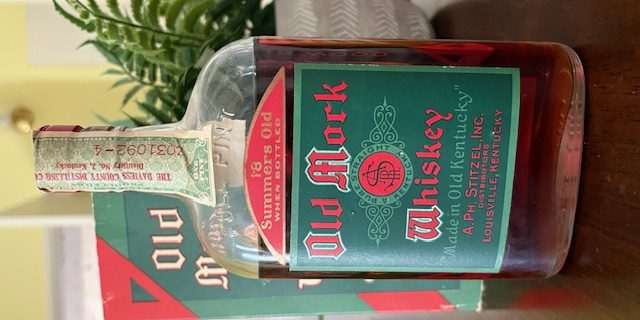
The Tax Strip: The green tax stamp over the cap indicates a bottled-in-bond or government-supervised bottling, showing production ties to The Daviess County Distilling Co. (Distillery No. 2, Kentucky). It was incredibly common during and immediately after Prohibition for surviving stocks to be consolidated, cleared, and bottled under different permits. Daviess County is where the Bluegrass Hall of Fame is located, in case you were wondering.
-
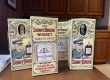
The Packaging: Finding a pint with its original, matching graphic box still intact is exceptionally rare. The deep green and bold red typography perfectly mirror the bottle’s main label.
-
Ullage & Condition: For a bottle that has been sitting for generations, the fill level (or ullage) remains remarkably excellent, retaining a rich, deep amber hue that speaks to nearly two decades in charred oak.
A huge thank you to Chuck from Springhill, OH, for sharing this incredible piece of liquid history with the community. Finding an 18-year expression from the Stitzel pipeline in this kind of condition is a true gem.
What do you think of Chuck’s find? Have you ever run across an historic Old Mock bottling in the wild? Get your bottle evaluated using my Whiskey Bottle Evaluation Page.